Botanic Garden and Attenborough Arboretum
Life Cycles
A selection of life cycle activities for KS2
Choose five from the eight plant and animal activities. Each activity is about thirty minutes.
Plant life cycles
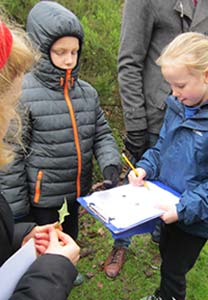
- Flowering plant - find examples of parts of the plant life cycle. Search around the Botanic Garden for examples of different stages of the flowering plant, life cycle sketching examples of a shoot, bud, flower, seeds/fruits.
- Clay seeds - each child designs a seed that demonstrates how it will be dispersed. They then make it from clay to take back to school.
- Helicopter seeds - make paper helicopter seeds, then test their effectiveness and how they spin. For Years 5 and 6, make different types of helicopter seed models, and investigate which best represents a real helicopter type seed.
- Tree identification - find six unique trees and use a special designed booklet to identify them. Decide whether the seeds are dispersed by wind, animals or humans.
- Squirrels - hide raisins around part of the site and later try to find them. Calculate the number lost, and link this to how it helps certain plants disperse their seeds.
- Classification - Years 5 and 6 find plant, animal and fungi examples in different classification groups.
Animal life cycles
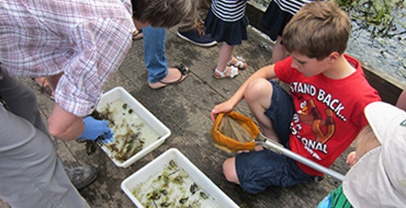
- Pond dipping - pond dip in our species rich pond and discuss the life cycles of the animals found. This could include dragon-flies, newts and snails.
- Minibeast - hunt for land based mini beasts. These can be identified using our charts, bug pots and magnifiers for a closer look.
Our teacher will deliver a targeted introduction depending on the age of the children, the activities chosen, and a plenary to draw together what has been learnt during the day.
- Age Group: KS2
- Availability: March to October for all activities. November to February activities include 1,2,3,5,6,8.
- Numbers: One or two classes
- Duration: A 20-30 minute taught introduction, followed by 30 minutes for each of the five activities.
- Cost: Please visit our programme costs page