University of Leicester researchers join €4.8m project investigating agentic AI for personalised breast cancer treatment
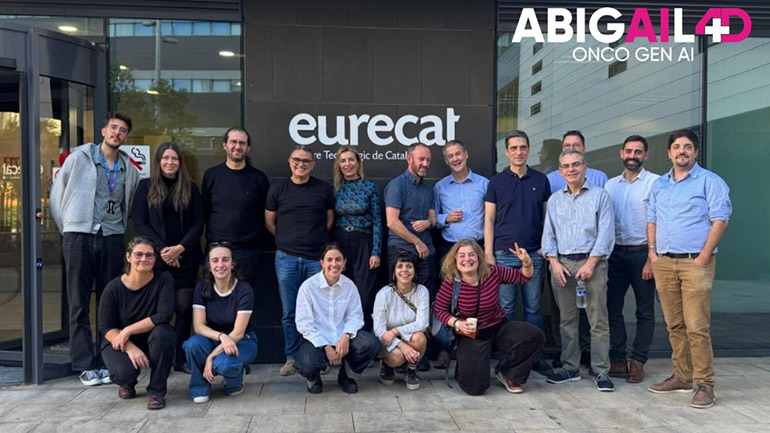


University of Leicester researchers are leading key elements of a major European research project exploring how Generative Artificial Intelligence (GenAI) could help doctors make more personalised treatment decisions for people with early breast cancer.
Advancing Breast Cancer Individualised Generative AI for Longitudinal Outcomes (ABIGAIL4D) brings together researchers, clinicians and technology specialists from across Europe to develop a new form of AI-based clinical decision support workflow.
Breast cancer treatment involves bringing together many different types of information about an individual patient and their cancer. Clinicians must consider factors such as medical imaging, pathology results, genetic information and clinical history when deciding which treatment options may be most appropriate.
To address this, ABIGAIL4D will develop and test a new GenAI system designed to learn how an individual patient’s cancer changes over time, bringing together the different types of information collected during a patient’s care to help clinicians better understand how a cancer may develop and how a patient might respond to treatment.
In particular, the system will explore different treatment options and estimate the potential benefits and risks for an individual patient, including different approaches to chemotherapy and radiotherapy. The AI will not make treatment decisions autonomously but will be designed to provide clinicians with clear, evidence-based actions to support their judgement, with healthcare professionals remaining in control at all times. The project will also consider important questions around the safety, transparency, interpretability and reliability of AI, including whether the technology performs consistently across different patient groups.
The University of Leicester leads two key work packages focused on the clinical co-design and evaluation of the AI decision-support technology, examining how it can deliver value for patients, clinicians and healthcare systems and how it could be integrated into clinical practice. Co-Investigator Dr Genovefa Kefalidou leads both work packages as part of the University of Leicester’s contribution to ABIGAIL4D.
Professor Chris Talbot from the Division of Genetics and Genome Biology is Principal Investigator for the University of Leicester, he said: “ABIGAIL4D is different from current tumour board decision-support systems in moving away from static, rules-based logic and single-modality data toward a 4D Generative AI system that models individual patient-specific disease evolution over time.”
Importantly, rather than developing the technology first and asking people to use it afterwards, the Leicester-led work on clinical co-design and evaluation will involve clinicians, oncologists and patients throughout the development process. Researchers will examine how the technology could fit within existing clinical practice, what people need from it, how its outputs should be presented and explained, and what is required for it to be used safely, effectively and appropriately.
As leader of the two Leicester-led work packages, Dr Kefalidou will oversee research into how clinicians and patients interact with the AI decision-support technology and how their expertise, experiences and needs can inform its design and evaluation. The work will also examine its clinical and wider health-system value and the requirements for its appropriate adoption in practice.
Dr Kefalidou, from the University’s School of Computing and Mathematical Sciences, said: “Powerful AI is only part of the challenge. If these technologies are going to make a meaningful difference in healthcare, they need to work for the clinicians and patients who will actually use and experience them.
“In ABIGAIL4D, we will put clinicians, oncologists and patients at the heart of the design process. Their expertise, experiences and real-world needs will help shape how the technology develops.
“That human-centred approach is essential if we are to create AI that people can trust and that can genuinely support better cancer care.”
Dr Tim Rattay, surgical lead and Co-Investigator in Division of Cancer Sciences said: “ABIGAIL4D is aiming to develop an AI workflow analogous to the multidisciplinary team meetings in which healthcare professionals discuss and decide the best cancer treatment pathways for individual patients, balancing effective tumour control and reducing side effects.”
Funded through the European Innovation Council under Horizon Europe from 1st October 2026 to 31st January 2031, the project has an EU contribution of approximately €4.8 million and is coordinated by Fundació Eurecat in Spain.
- Further information is available on the ABIGAIL4D project page on the European Commission’s CORDIS portal.
- ABIGAIL4D is funded by the European Union under Horizon Europe through the European Innovation Council, Grant Agreement No. 101307206.