Leicester psychologist’s personal experience with Huntington’s disease inspires new book
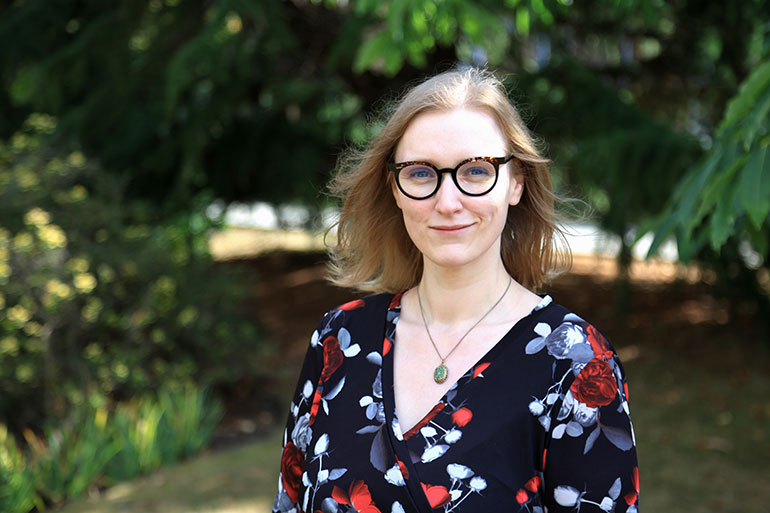
Dr Sarah Gunn




Just as clinical psychologist Dr Sarah Gunn began her career supporting people with Huntington’s disease (HD), she uncovered an unlikely family secret: the rare, life-limiting condition was part of her own story.
The discovery of her father’s diagnosis, following his development of unexplained symptoms, shocked her to the core – not least because she now knows she is at 50% risk of developing HD herself.
It led to a career move which ultimately went full circle as she gathered the strength and tools to help those with HD – an inherited, progressive neurodegenerative condition which causes nerve cells in the brain to break down and die. HD severely impacts a person’s movement, mobility and thinking, and it’s linked to changes in emotions and behaviour too.
“My world had changed overnight, a feeling which I know from my therapeutic work is very common among people who have suddenly found Huntington’s to be part of their life,” Sarah says in the book.
She explores this out of the blue “revelation” and much more in her book ‘Coping with Huntington’s: A Path to Better Mental Wellbeing’ out now by publisher Routledge, in collaboration with the Association of Clinical Psychologists (ACP-UK).
The book offers a personal and unique perspective on HD as well as providing practical ways on how to cope with its emotional impacts using Acceptance and Commitment Therapy (ACT).
In the book, Sarah argues that although there is not yet a cure for Huntington’s, there are ways in which individuals (whether living with the HD gene expansion, at risk, or as another member of an HD family) can take back some control over the condition by learning to live well alongside HD, despite its associated struggles.
She highlights how life can still have deep meaning and encourages individuals to both find new ways to care for themselves and to seek out support, outlining the options and tools available to people.
A foreword by Professor Hugh Rickards, Consultant in Neuropsychiatry, eloquently states that HD is an “illness that has historically come with a great deal of social taboo and shame. Sarah’s approach is to shine a very bright and personal light on this and, in doing so, dispel some of those emotions.
“Her writing style is very personal. This works really well when discussing psychological issues and psychological therapies, as she’s able to describe theories and evidence but then talk about personal experiences.”
The book has been endorsed by key members of the HD community. Cath Stanley, Chief Executive of the Huntington’s Disease Association, said: “This book offers an extremely unique perspective on the many facets of Huntington’s disease – telling the story from a personal perspective, then offering some really practical insights on coping with the disease, and into psychological research.”
The Chair of the European Huntington’s Disease Network, Dr Patrick Weydt, said: “A very brave and personal book and an important resource. Moving and inspiring, it will be very useful for our community of people affected by or dealing with Huntington’s.”
Speaking about what the book means to her and what she hopes readers will gain from it, Sarah says: “I wrote this book because there isn’t enough recognition of the mental wellbeing difficulties experienced by members of Huntington’s families, and we desperately need better psychological support for the community as a whole. I hope that the book will show how people can take steps towards better mental wellbeing for themselves, and promote the need for improved support more widely. As I say in the book: People from Huntington’s families aren’t helpless, and Huntington’s doesn’t get to beat us.”
The book is available for pre-order and out on 1 July, available by clicking here with a 20% discount code when applied APSYCCWH20.
Dr Gunn will be talking about the book for the Huntington’s Disease Association in August. For more information on this click here.