Clearing 2026: our expert in decision making has top tips for applicants
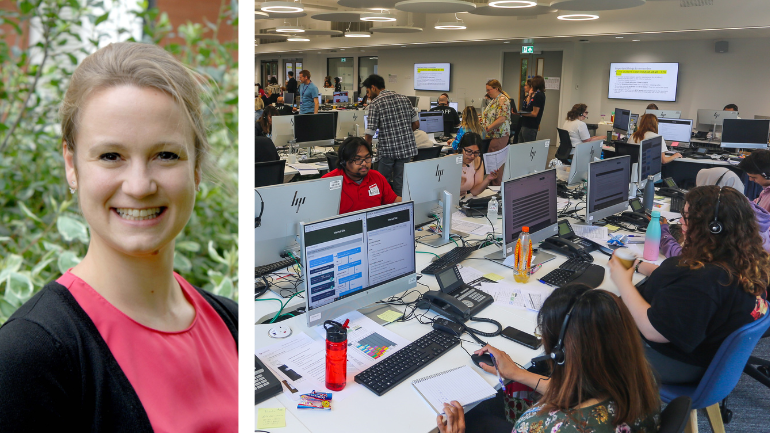




As A-level students across the nation prepare to find out their results, a University of Leicester psychologist and expert in decision making has given her top tips for those facing a big decision in Clearing.
Choosing a university is a major life decision and going through Clearing can feel overwhelming, especially if things haven’t gone as planned. You may be dealing with disappointment from unexpected exam results, asked to make a quick, high-stakes decision about your future, and the emotional pressure can make it harder to think clearly and weigh up options.
But with the right mindset and tools, you can navigate this process with confidence, according to Dr Eva Krockow from the University of Leicester School of Psychology and Vision Sciences. An expert in the psychology of judgement and decision making who has written widely on these topics, she has given her top tips on how to navigate these challenges for those receiving their A-level results this week:
Clearing might not have been your original plan, but it can still lead to a fulfilling and exciting university experience – trust me, I am speaking from experience.
One of my best-ever third year dissertation students joined the University through Clearing. She’d originally planned to do Medicine but didn’t quite achieve the required grades. She ended up opting for Psychology and came to Leicester through Clearing. The student ended up doing fantastically well and had a very positive experience and is now undertaking a Health Psychology doctorate.
Her story isn’t unusual. She is just one of many thousands whom, each year, overcome an initial set-back and find their path to success thanks to Clearing.
What follows are some of my tips to navigate Clearing. Stay calm, stay focused, and remember: you’ve got this.
Put things into perspective
There’s rarely one “perfect” university – many paths can lead to success. Not getting into your first choice doesn’t mean failure, other options may offer exciting, unexpected opportunities. Any university experience will likely help you grow in independence, confidence, and skills.
Read more: https://www.psychologytoday.com/us/blog/stretching-theory/201811/how-ace-big-choices
Use simple rules of thumb
You’ll need to act quickly, so prepare a shortlist of universities in advance. This background information will set you up for success in case you need it on results day.
Simple decision rules can work just as well – or better – than spending hours weighing up every option. One such decision rule is satisficing – choosing the first option that meets your key needs. Try to focus on one or two key criteria that matter most to you, such as:
- University ranking
- Course satisfaction scores
- University location
- Number of student societies and extracurricular activities.
Previous research suggests that satisficing can help to reduce decision regret and leave people feeling happier overall.
Read more: https://www.psychologytoday.com/gb/blog/stretching-theory/201810/4-rules-thumb-make-faster-decisions
https://www.psychologytoday.com/us/blog/stretching-theory/202110/whats-great-about-good-enough
Trust your gut
Overthinking can lead to analysis paralysis, where you struggle to make any decision at all. Quick, intuitive choices often feel easier and can boost your mood and confidence.
If you're feeling particularly indecisive, consider using a simple decision ‘catalyst’ like flipping a coin or rolling a die. This can help clarify your true feelings. Pay attention to your reaction – do you feel relief or disappointment when the result is revealed? That emotional response can be a powerful signal about what you actually want.
Trusting your instincts may help you feel more motivated and positive about your next steps.
Read more: https://www.psychologytoday.com/us/blog/stretching-theory/202401/should-you-listen-to-your-gut
https://www.psychologytoday.com/gb/blog/stretching-theory/202008/should-you-let-the-dice-decide
Seek second opinions
The above pointers can help clarify your own thoughts and preferences, but seeking second opinions is always wise, especially when facing big decisions. Research shows that diverse perspectives in groups can lead to better outcomes – this is called the ‘wisdom of crowds’. In large groups, extreme views tend to balance each other out, often resulting in more moderate and well-rounded decisions. Friends and family with more life and university experience may offer particularly valuable insights from having been through it themselves.
Read more: https://www.psychologytoday.com/gb/blog/stretching-theory/202011/why-three-doctors-heads-are-better-one
All courses available via Clearing are on the website. The website also includes a live chat function, links to live information events, a guide to applying, answers to frequently asked questions, information for parents and more.
Students who have their grades can call 0116 373 6000 where staff can chat through the options or contact us on WhatsApp by clicking the link on our website. Our Clearing hotline is open Monday to Friday 9am to 5pm and Saturday 10am to 3pm and our WhatsApp team can answer your messages Monday to Friday 9am to 4.30pm and Saturday 9am to 2.30pm
Those waiting for results, can call or use WhatsApp between 7am and 9pm on results day (Thursday 13 August). On Friday 14 August lines are open 8am to 6pm.
The University offers guaranteed University-managed accommodation if applicants apply before 1 September 2026.