University of Leicester researcher awarded £2m to tackle childhood sight loss
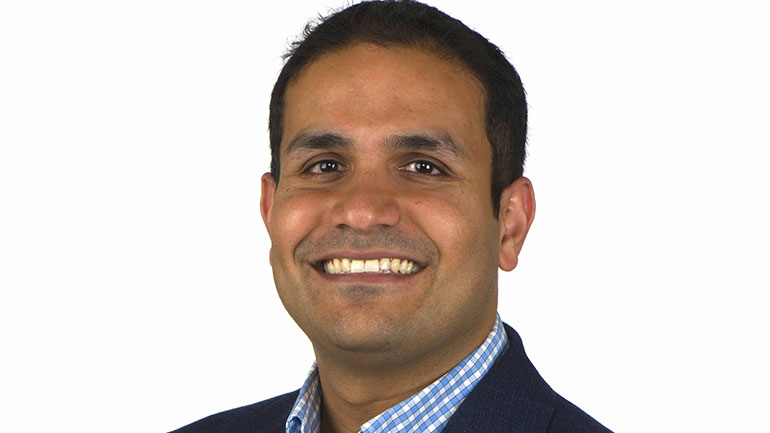
Dr Mervyn Thomas




University researcher, Dr Mervyn Thomas, has been awarded just over £2 million to understand why some children’s eyes do not develop as they should.
The Career Development Award, from the Wellcome Trust, provides funding to conduct relevant research into the Fovea – the tiny region of the eye no bigger than a pinhead which we rely on to give us sharp and detailed vision.
Damage to the fovea significantly reduces visual sharpness, making even simple visual tasks challenging. In some children the fovea fails to develop properly, a condition called foveal hypoplasia, leaving them partially sighted or registered blind.
This award funds eight years of research to understand how the fovea normally develops, why it sometimes goes wrong, and what that means for the children affected. The human fovea reaches maturity during childhood and can also deteriorate as we get older.
Speaking about the award, Dr Thomas, Clinical Associate Professor, Honorary Consultant Ophthalmologist and Clinical Lead at the Ulverscroft Eye Unit at the University of Leicester, said: “I hope that by the end of this programme, when a family sits in front of me and asks why this happened to their child, I will finally have an answer.
“My aim is to understand whether there is a window early in a child's development where we could intervene, and if so, which biological pathways we would need to target. Those are questions we cannot even begin to answer right now but I hope this research will put us in a position to ask them properly for the first time.”
Funding will pay for a dedicated research programme in Leicester, focussed on normal and abnormal foveal development. The programme will create novel models that mimic human foveal disorders, testing whether restoring faulty biological pathways can rescue normal development, and imaging patients using a custom-built ultra-high-resolution eye scanner to study the fovea at a level of detail never before possible in a clinic.
Dr Thomas added: “I have been fascinated by the fovea from my time at medical school. It has amazed me how this structure develops and contributes to our vision. Now as a clinician, I sit with children and families affected by foveal hypoplasia and face questions I cannot yet answer including: Why did this happen? Will there ever be anything we can do?
“This award gives my team the opportunity to begin answering those questions. Right now we simply do not understand enough about how the fovea develops to know whether we can or where to intervene. But this research could change that, and in doing so, open the door to possibilities that don't yet exist for these families.
“It is also a recognition of everyone who has contributed to this work, my team, collaborators, and most importantly the patients who trust us with their care.”
Professor Tom Robinson, Head of the College of Life Sciences at the University of Leicester, said: “Congratulations to Dr Thomas for this hugely prestigious Career Development Award. It truly is recognition of the high quality and pioneering nature of research taking place which will have a real-world impact. Dr Thomas and his team reflect all that we seek here at Leicester – to be true Citizens of Change.”
The London-based Wellcome Trust is one of the world's largest independent charitable foundations and supports science to solve urgent health challenges.