University of Leicester chemist joins charity in superbug warning for gardeners
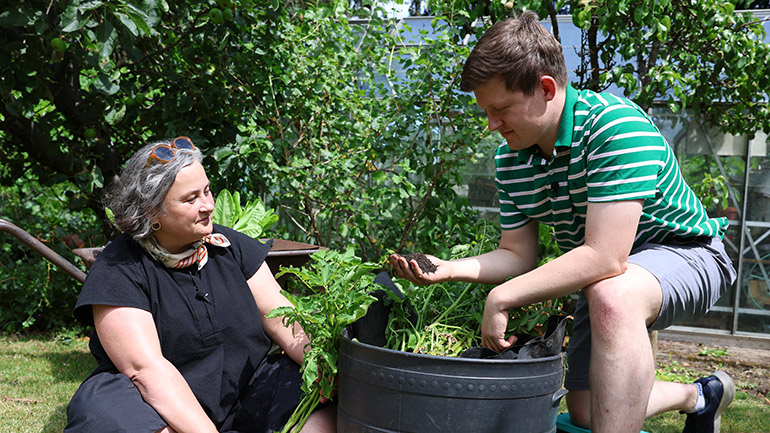
Dr Angela Hind and Dr Josh Smalley in Josh's garden.




The University of Leicester’s Science Communication and Engagement Champion, Dr Josh Smalley, has teamed up with a leading medical charity to raise awareness of two unlikely companions - gardening and superbugs.
The Great British Bake Off finalist joins Dr Angela Hind, Chief Executive of the Medical Research Foundation, in their new short film Your garden and antibiotics: the unexpected link which comes out on Thursday 27 August.
Alongside baking spectacular science-themed showstoppers and explaining the science behind food, Josh shares his passion for gardening online from his garden near Leicester. For this new film, to get their hands in the soil at Josh's vegetable patch while discussing the fight against superbugs.

8,500 people are hospitalised from gardening injuries every year in the UK. This bank holiday weekend, the Medical Research Foundation - a UK charity funding research into drug-resistant infections and other underfunded areas of health - has a message for the nation's gardeners: enjoy your gardens, but don’t ignore the growing threat of superbugs.
Antimicrobial resistance happens when microbes - including bacteria, fungi, viruses and parasites - evolve to resist the drugs designed to kill them – antibiotics, antifungals, antivirals and antiparasitics. Today these microbes are often described as ‘superbugs’.
Soil was the original source of many antibiotics, including tuberculosis-fighting streptomycin, but no new classes of antibiotics have been discovered in 40 years. Combined with the ongoing overuse and misuse of the drugs we do have, this has enabled a growing number of infectious microbes to become resistant to antibiotics and other medicines. This means infections that were once treated simply and reliably could now pose a significant threat to our health.
It's this drug-resistance that makes gardening injuries a growing concern. Most gardening accidents happen between April and September, and many people use bank holidays to get out into the garden. A simple cut, graze or splinter always carries risk of an infection - and while many of these infections are still treated successfully with antibiotics, this is changing rapidly. Today, an infection that might have once been treated with a short course of antibiotics could, increasingly, become a serious, even life-threatening, illness.
Angela, who’s also a keen allotment-keeper, said: “Gardening does so much for the planet and for our own physical and mental health. We want to be able to continue to enjoy it. But as antibiotic resistance grows, even small injuries like a cut or a splinter need to be looked after carefully. That's why we fund research into superbugs: so the infections we can treat easily today don't become untreatable tomorrow.”
Josh added: “When we’re out in the garden, the last thing on our minds is what might be lurking in a splinter or a scratch. Making this film really brought home how much we take antibiotics for granted. Superbugs can sound like a distant problem, but they're already changing how doctors treat everyday injuries. I still want people to get outside and get their hands dirty - just with their eyes open.”
Having already funded £4.3 million of antimicrobial resistance research, the Medical Research Foundation recently ran a new funding call to support more research in this critical area. The charity has received more than 50 applications from researchers across the UK, covering topics ranging from the genetic bases of drug-resistance, to the impact of climate change on superbugs and improving infection control.