Families left unsupported after children leave intensive care, major UK study finds
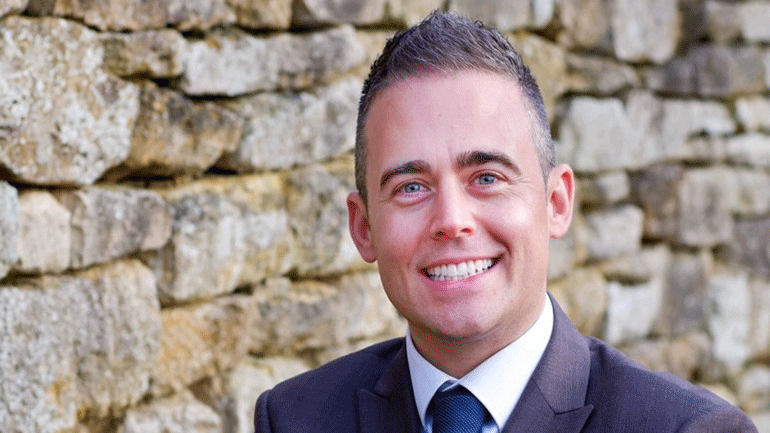
Professor Joseph Manning




Families are being left to manage complex and lasting physical, psychological and social challenges on their own after a child is discharged from paediatric intensive care, according to a major UK-led study.
The study, funded by the National Institute for Health and Care Research (NIHR), was conducted across seven paediatric intensive care units (PICUs) in England.
It followed families for up to nine months after PICU discharge and found that many experience fragmented care, lack of follow-up, and enduring strain on family life, despite high survival rates from critical illness.
Led by Professor Joseph Manning at the University of Leicester and Nottingham Children’s Hospital and an international team from Universities of Nottingham, Plymouth, and Pennsylvania, the research, published in Intensive and Critical Care Nursing, draws on in-depth interviews with children, parents and siblings and applies the internationally recognised Post-Intensive Care Syndrome in Paediatrics (PICS-p) framework to understand recovery beyond hospital discharge.
"Children are surviving paediatric intensive care in greater numbers than ever before, but our study shows that families are too often left unsupported once the immediate crisis ends," said Professor Manning.
"Recovery does not stop at discharge. Without structured follow-up, some families are forced to navigate ongoing health concerns, psychological distress and social pressures largely on their own."
Unmet needs persist for months after discharge
In the UK’s largest qualitative study of its kind, interviews with 57 participants from 40 families revealed widespread and interconnected unmet needs across physical, cognitive, emotional and social domains, including ongoing symptoms and rehabilitation needs, cognitive and administrative burden, persistent psychological distress, financial strain, disrupted schooling and employment, and impacts on siblings and family relationships.
Parents frequently prioritised caregiving responsibilities over their own wellbeing, delaying or avoiding seeking help even when distress persisted many months after discharge. Siblings were also affected by the experience, yet were rarely included in follow-up care or offered targeted support.
Implications for NHS practice and policy
The authors call for NHS-wide action to embed family-centred recovery into paediatric critical care pathways, including routine structured follow-up after PICU discharge, early screening for PICS-p-related morbidity, integrated psychological support, improved coordination between hospital and community services, and recognition of financial and social determinants of recovery.