Many children do not regain pre-illness quality of life a year after paediatric intensive care, national study finds
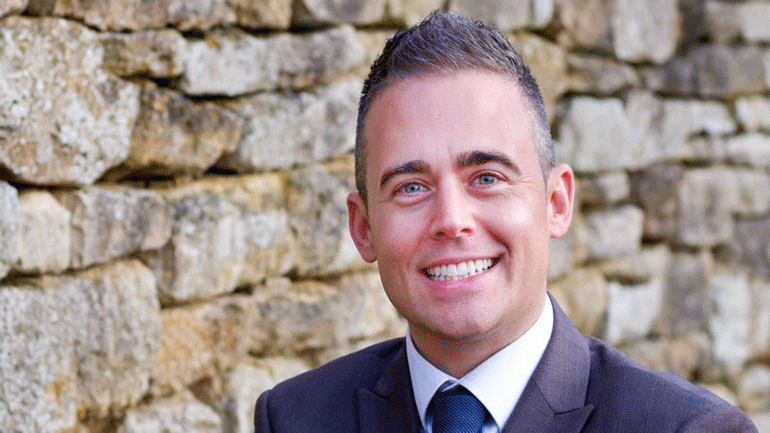
Professor Joseph Manning




Paediatric experts from the University of Leicester say better post-hospital care is needed to ensure children regain their quality of life following an intensive care stay.
It follows the results of the largest study in England to track children up to one year after discharge from paediatric intensive care, which found that over half had a poorer health-related quality of life 12 months later than when they were first admitted.
The study, published in Springer Critical Care was funded by the National Institute for Health and Care Research (NIHR) with the aim to understand the lasting impact on families and identify care and support needs.
It showed that recovery was uneven among young patients post hospital and although cognitive scores returned to their original baseline quickly, physical health did not in terms of how they felt and functioned on a daily basis, emotional wellbeing, ability to carry out usual activities and overall sense of recovery.
The research from the UK-based OCEANIC (Outcomes of ChildrEn and fAmilies after paediatric INtensive Care) study led by Professor Joseph Manning at the University of Leicester and Nottingham Children’s Hospital and international team from Universities of Nottingham, Plymouth, Pennsylvania, was conducted across 10 paediatric intensive care units (PICUs) in England.
Children aged 1 month to 17 years who stayed in PICU for at least 48 hours were enrolled and followed up to 12 months after discharge.
FindingsResearchers enrolled 326 children, with some 220 contributing at least three quality-of-life assessments (baseline, discharge, plus at least one follow-up).
Health-related quality of life (HRQoL) was measured using a standardized assessment tool for children and adolescents known as the PedsQL™ measure. This reflected their quality of life two weeks before admission, discharge and at one, three, six and 12 months after.
Across the cohort, average HRQoL fell sharply during the PICU stay, from a mean PedsQL total score of 73.3 at baseline to 54Scores improved mainly in the first month after discharge (62.9 at 1 month; 67.1 at 3 months), and then stabilised (70.4 at 6 months; 69.8 at 12 months).
Using each child’s own pre-admission score as the reference point, 71.8% of children were below baseline at discharge (158 out of 220).
Among those who responded at 12 months, 58.1% remained below baseline (75 out of 129).The study noted that withdrawals from the assessments were common over time (141 out of 326), with the largest number of withdrawals at one-month post-discharge, and that later estimates should be interpreted cautiously because of attrition.
Professor Manning, from the University of Leicester’s College of Life Sciences, said: “Survival after paediatric critical illness has improved, but many children experience ongoing physical, cognitive, emotional and social issues, after discharge.
“This study strengthens the evidence that recovery commonly plateaus after the first month, and persistent problems may concentrate in physical recovery and participation in education.
“It’s clear that some children need extra support from multidisciplinary health services to ensure they can return to their pre-hospital quality of life and be able to function as they did at school or other settings.”
Adrian Plunkett, President of the Paediatric Critical Care Society (PCCS), added: “The OCEANIC study provides vital evidence about the long term impact of paediatric critical illness. Its findings underline the need for sustained, multidisciplinary support for children long after they leave intensive care. I’m proud that PCCS members contributed to this important work, which will help shape better recovery pathways for children and families across the UK.”
Carli Whittaker, UK Head of Nursing Practice at Royal College of Nursing said: "This important national study shows that survival is no longer the only outcome of importance for critically ill children and their families. This identifies that a large proportion of children are leaving hospital with lasting physical, emotional, intellectual and social difficulties that persist for months, and in many cases beyond a year.
"Nurses see the consequences of this gap in follow-up care every day. We need properly resourced, nurse-led pathways that support children and families after discharge, with coordinated input from community, rehabilitation, and specialist services. Without that continuity, recovery stalls.
"Investment in the paediatric nursing workforce across hospital and community settings is essential. For children to regain their quality of life, reintegrate into school and activities they enjoy, whilst mitigating the risk of impact on long term outcomes for these children and their families, nursing workforce is integral."