Researcher hopes to find new treatment for people with Cystic Fibrosis using phage therapy
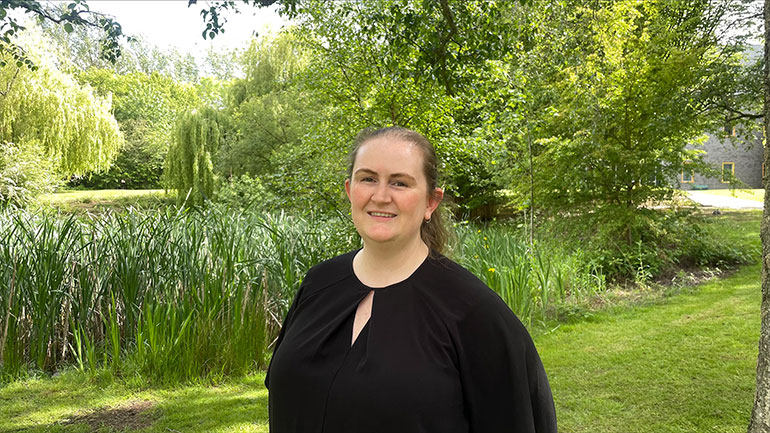
Dr Jessica Lewis




Researcher Dr Jessica Lewis has been awarded part of a £1.3 million pot of funding to explore bacteriophage treatments for people with cystic fibrosis.
The funding, from Cystic Fibrosis Trust, will enable her to investigate whether new combinations of bacteriophage could be used to treat those with the severe lung infection caused by Burkholderia cepacia complex (BCC).
Phage therapy uses viruses known as bacteriophages to infect and kill bacteria. Unlike antibiotics, which often kill good bacteria, phages are highly specific and only target particular strains of bacteria to treat diseases in humans and animals. The difficultly, however, is finding phages and making the right combinations to treat the infection.
Dr Lewis, from the University of Leicester, aims to harness the biobank facilities in the University’s Becky Mayer Centre for Phage Research over the next 3 years to find new and effective treatments for BCC infections in people with cystic Fibrosis (CF).
The inherited genetic condition causes the body to produce thick, sticky mucus which builds up and clogs the lungs and other organs, leading to severe infections and chronic digestive issues.
Dr Lewis knows only too well how dangerous CF can be, having lost a childhood friend to the condition.
She said: “My research will be done in memory of my friend, Simone, who I lost to CF and who is never far from my mind.
“When I went to University, I lived only 15 minutes away from the hospital treating her, so I would visit whenever she was admitted and try and cheer her up. We did little craft projects together to make her room on the isolation respiratory ward a bit of a happier place to be.
“Since I was learning microbiology, we'd chat about different bacteria, particularly ones she had an infection of, and I'd tell her the 'fun facts' (like Pseudomonas can make your breath smell like grapes). She passed away just before her 22nd birthday, but her younger brother is still living with CF.
“I didn't know then that my work would lead me to phage therapy but I hope that I can optimise phage treatments for BCC lung infections in people with CF, and provide a more streamlined and faster access to phage treatments for those who really need them.”
Cystic fibrosis lung disease is characterised by repeated cycles of infection and inflammation that cause lung damage. Work to understand inflammation in CF, how best to measure it, or how to treat it is ongoing.
Dr Paula Sommer, Head of Research Awards and Partnerships at Cystic Fibrosis Trust said: “Lung infections in people with CF caused by bacteria in the Burkholderia cepacia complex are very difficult to treat due to antimicrobial resistance.
Bacteriophage therapy offers a different way to effectively treat these infections. We're excited to fund research in this area - effective phage treatments have the potential to reduce lung damage and improve the quality of life for those affected.”
Dr Andrew Millard, Co-lead of the Becky Mayer Centre for Phage Research added: “Jess`s work demonstrates the growing interest and huge potential in phage therapy to tackle some of the most difficult infections faced by people with cystic fibrosis.
“The project will help develop more effective and targeted treatments for people with Burkholderia cepacia complex infections, and we’re excited to see the impact it could have for the CF community."