Martha’s Rule mum discovers how the University of Leicester believes reading and writing can boost medical students’ empathy
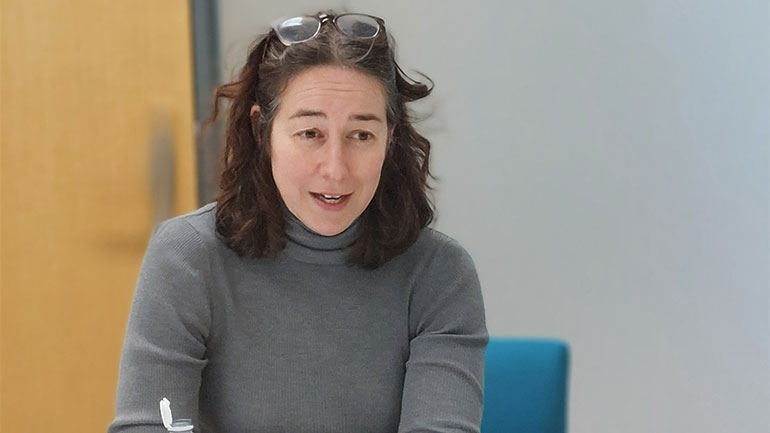
Merope Mills talking to Medical students during her visit to the University




A patient safety campaigner whose daughter died following a hospital mistake has met with University of Leicester Medical students to find out how a book club is boosting their empathy.
Doctors in training at the University are being prescribed reading and writing sessions as part of their studies, in a move to address the problem of a lack of empathy in UK medical professionals.
Merope Mills, who is behind the nationwide Martha’s Rule initiative, lost her 13-year old daughter Martha to sepsis at King’s College Hospital in 2021.
Concerns raised by Merope over Martha’s hospital care at the time were not listened to and a coroner later ruled that Martha would probably have survived if she had been transferred earlier to intensive care and given appropriate treatment.
Following Martha's death, Merope campaigned for patients and their families to have the right to an urgent review from a critical care outreach team, known as Martha’s Rule. A telephone helpline to raise any such concerns has since been established and is being piloted across more than 140 hospital sites in England.

Martha Mills
She observed a lesson of Foundation Year Medical students dissecting text from a book written by Dr Benji Waterhouse – ‘You Don’t Have to Be Mad to Work Here’ about the world of psychiatry.
The lesson, led by Dr Felicity James, Associate Professor from the University’s English department, aims to give Medical students the chance to reflect on the profession, treatment of patients – good or bad - as well as the impact individuals such as themselves can have on the people they care for and work colleagues.
“Shared reading and creative writing are a brilliant way to encourage all the skills that Medical students and healthcare practitioners will need elsewhere in their degrees and careers. We know that close critical reading and perspective taking are very important to develop observation and curiosity,” says Dr James.
Dr Rachel Winter, Associate Professor in Medical Education and Empathic Healthcare at the Stoneygate Centre for Empathic Healthcare, said: “We encourage students to engage with a range of texts throughout their degree. For the book club element of the course we’ve chosen Benji’s book, which draws on his own experiences as a psychiatrist. It provides fantastic insight into the world of psychiatry in an accessible and humorous way, but it’s also deeply thoughtful and Merope was able to see that first hand through the students’ critique.
“Our aim is to highlight how important empathy is in medicine, whether it’s talking to a patient and looking beyond the notes you have in front of you, or helping a child try to understand their symptoms or really listening to a parent who knows their child best. Empathy can be taught and can help clinicians better understand patients’ needs. Helping our medical students to enhance their skills in empathy helps them become doctors who take the time to listen, understand, reflect and provide safe and effective care.”
Dr Sam Adcock, Medicine Foundation Year Lead and Associate Professor, added: “This element of the course really gets students to think deeply about how to connect and build rapport with their patients by taking just that small amount of extra time in order to improve outcomes.
“It’s about building in a litmus test to each consultation so that they ask themselves, if this was my mum, dad, or loved one, would I be happy with how they’ve just been spoken to and treated? If the answer is yes, then they have passed the empathy test.”
In their early training days, Leicester Medical students also partake in regular role-play patient consultations, focusing on rapport building exercises, rather than diagnosis. It’s a method the students themselves say is helping to develop their empathy.
Fourth Year Medical student Emily West said: “I can see the empathy skills taught throughout the course really help to put patients at ease - by building a listening culture into patient consultation. It’s something that’s definitely noticed and highly thought of when Leicester students are out and about on placements.”
Reflecting on her visit to the University, Merope, says: “I know from experience how important empathy is in medicine. I'm not sure Martha's doctors regarded her as a real person, as they would have their own daughters. It was fascinating to see empathy education in action and it gave me hope that new generations of students will be more adept at listening.”