Together We Can 2026: Partners unite to promote health equality at summit
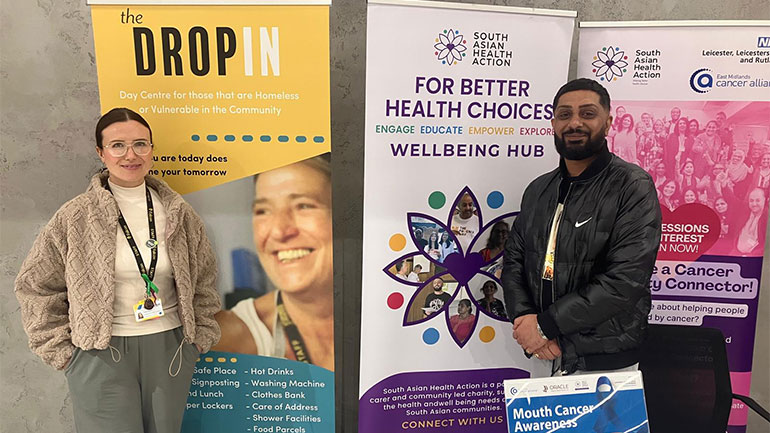
Stallholders at the health inequalities event




A summit involving 250 healthcare professionals, academics and representatives of local communities has been held to plan actions which will reduce health inequalities across Leicester, Leicestershire and Rutland (LLR).
Run by University Hospitals of Leicester (UHL), in partnership with the University of Leicester (UoL) and Novartis, Together We Can 2026: A Summit for Health Equality brought colleagues together to share proven, practical approaches and tools that support better outcomes for those facing the greatest barriers to accessing healthcare services in LLR.
Health inequalities are avoidable differences in people’s experience of healthcare, which are linked to factors including ethnicity, disability and deprivation. Data shows that people living in the most deprived neighbourhoods of LLR experience poorer health outcomes and shorter healthy life expectancy than those living in less deprived areas – making it crucial for partners in the local health and care system to work together to improve access to healthcare and outcomes for those at the greatest risk.
To provide inspiration, speakers showcased projects which are making a difference for patients in LLR.
- Consultant Medical Oncologist, Dr Olubukola Ayodele presented on work to improve breast cancer outcomes for Black women.
- Abdominal Aortic Aneurysm (AAA) Screening Programme Manager, Annette Olalobo discussed the local AAA screening programme.
- Honorary Homelessness Engagement Nurse, Bernadette Wharton and Head of Transformational Improvement, Danisha Champaneri presented on homelessness in the acute healthcare setting.
- Head of Patient and Community Engagement, Karl Mayes, gave an update on community evaluation of the HeyGen AI translation service.
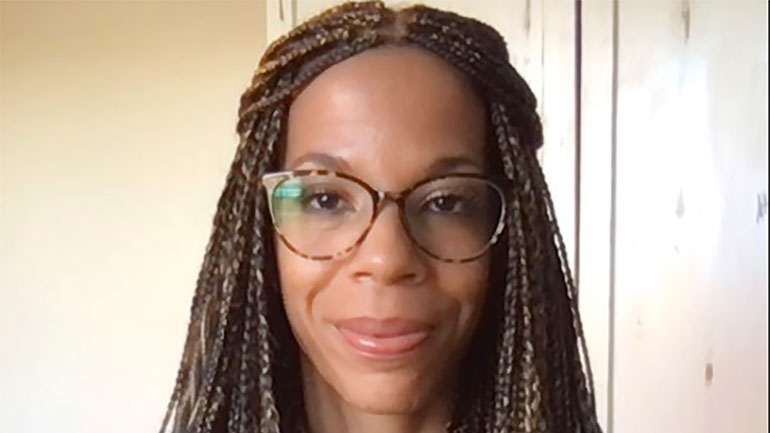
Dr Natalie Darko
Colleagues gathered for group sessions to explore a wide range of topics, including addressing inequalities in cancer care, anti-racism approaches in maternity, and culturally responsive practice in end-of-life care. Several of the breakout sessions were facilitated by members of the Health Equality Partnership, a group which brings together a diverse range of local communities and organisations to shape how we work with the people who use our services to address health inequalities.
The event, on Wednesday 15 April, was opened by Richard Mitchell, Chief Executive of the UHL – University Hospitals of Northamptonshire NHS Group. The keynote speech was delivered by UHL’s Director for Health Equality and Inclusion, Dr Ruw Abeyratne, with closing remarks provided by Ivan Browne, Professor of Public Health at De Montfort University and Non-Executive Director at UHL.
UHL’s Director for Health Equality and Inclusion, Dr Ruw Abeyratne, said: “The latest Together We Can summit demonstrates our ongoing commitment to creating a more equitable healthcare system for the region, and to tackling the unfair, avoidable health inequalities which affect some of our most vulnerable patients.
“The voice of our communities was threaded through the entire event, and the relationships between partners which have been created and strengthened will make a real difference to outcomes for patients in the future.”
Professor Neil Chakraborti, Director of the Institute for Policy at the University of Leicester, said: “At a time when crucial themes around equality are being sidelined, trivialised or overlooked in so many spheres, this summit provided a timely reminder of why and how we can come together to reduce health inequalities.
“Drawing from world-leading research expertise, lived experience, regional partnerships and innovative practice, the summit has been hugely successful in identifying practical and inclusive solutions to urgent problems.”