Leicester-led issue of prestigious journal collects latest thinking on human impact on biosphere
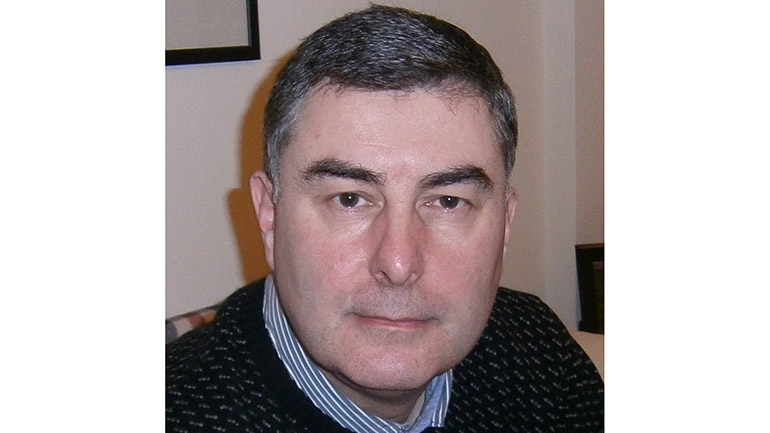
Professor Mark Williams from the University of Leicester School of Geography, Geology and the Environment.




The latest thinking in how humans are changing the nature of life on Earth, for better or worse, is explored in a special volume of one of science’s most prestigious journals, edited by a University of Leicester expert in the Anthropocene.
The latest issue of Philosophical Transactions of the Royal Society B published today (22 January) is dedicated to ‘The biosphere in the Anthropocene’, exploring the implications of the proposed new epoch that marks when humans began to significantly impact the Earth.
It is guest-edited by Professor Mark Williams from the University of Leicester School of Geography, Geology and the Environment alongside Mary McGann, Moriaki Yasuhara and Chhaya Chaudhary. An expert in the concept of the Anthropocene, Professor Williams research into the new epoch is a key theme for the University’s Institute of Environmental Futures.
Philosophical Transactions of the Royal Society has the prestige of being the world's longest running science journal, and today is produced as two separate publications, one serving the biological sciences ('B') and the other serving the physical sciences ('A'). Across its history, it has published work by luminaries of the scientific world such as Isaac Newton, Charles Darwin, Michael Faraday, William Herschel, and more.
Professor Williams and colleagues have dedicated this issue to quantifying the impacts of humans on the biosphere, that part of the Earth’s system that encompasses all life that inhabits the planet. For thousands of years people have modified landscapes for farming, domesticating a small number of animals (whose numbers burgeoned) whilst wild species diminished. More recently we have impacted the coastal zones, and as technology advanced, our influence has spread across the continental shelves and into the deep oceans. Now, many thousands of non-native species moved by humans have reset the complement of animals and plants in ecosystems globally, both on land and in the sea.
The volume examines trajectories of change that might lead to a mass extinction, as tropical oceans warm and become less hospitable to life, as populations of many animal species decline rapidly, and because our continued rapacious desire for the Earth’s resources is reducing the habitats available for wildlife. For example, mining the deep oceans for minerals will significantly impact areas of high ocean biodiversity.
But the volume also examines pathways towards a better future, where peak agriculture allows us to make more space for the other species on our planet and where learning from local and indigenous knowledge can help forge better and more mutually beneficial relationships between humans and the rest of the biosphere.
Professor Mark Williams from the University of Leicester School of Geography, Geology and the Environment said: “Many human communities interact with their habitats in beneficial ways, actively fostering the biodiversity around them. If we could just learn from the skillsets of those communities our relationships with wildlife would be so much better, and we could avoid the dangerous trajectory towards a mass extinction.”
The Earth is now in a period of major global environmental change driven by human activities, leading to the suggestion that we no longer live in the Holocene Epoch of geological time but instead are in the Anthropocene Epoch, one dominated by humans.
While it may not have been formally accepted on to the Geological Time Scale, Leicester’s researchers are amongst a swathe of specialists who say the Anthropocene is real and its effects have drastically and irrevocably changed the living conditions on our planet. They argue it should therefore be treated as a de facto new epoch of Earth’s history.