Major heart attack study reveals ‘survival paradox’: Frail men at higher risk of death than women despite better treatment
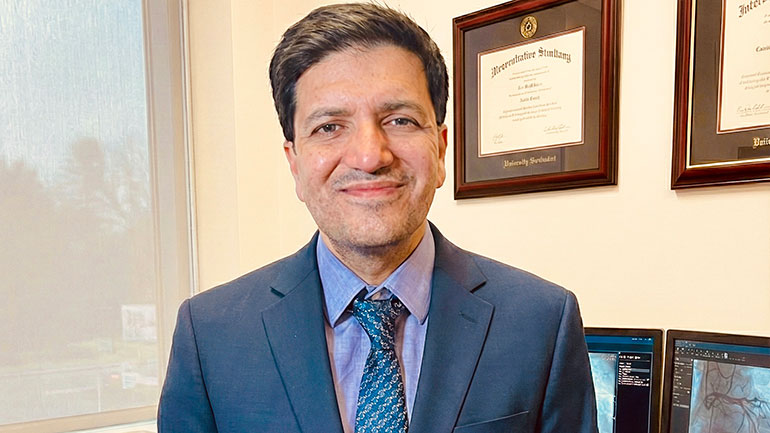
Dr Muhammad Rashid




Pioneering research from the University of Leicester and NIHR challenges the ‘one-size-fits-all’ approach to heart attack care, adding critical nuance to the debate on sex disparities.
A groundbreaking new study involving more than 900,000 patients has revealed a "sex-frailty paradox" in heart attack outcomes, challenging the prevailing narrative that high clinical risk is predominantly a female issue.
While considerable focus has rightly been placed on addressing the fact that women are often undertreated compared to men after a heart attack, this new research, published in The Lancet Regional Health - Europe, highlights a hidden and profound vulnerability in men.
The study, led by the University of Leicester and funded by the National Institute for Health and Care Research (NIHR) and British Heart Foundation Centre of Excellence, found that while severe frailty is indeed more common in women following a heart attack (acute myocardial infarction, or AMI), the actual risk of dying within one year is significantly higher for frail men.
This creates a complex picture where women face inequalities in access to care, but frail men face a ‘malignant’ prognosis that current standard treatments are failing to address.
The study is the largest of its kind, analysing national data over a 15-year period to disentangle the relationship between sex, frailty, and survival.
It challenges current risk assessments including patient frailty and age used by clinicians to determine treatment strategies, highlighting the need for sex informed care pathways to be included.
Patient frailty has long been an indicator of poorer outcomes, including mortality, rehospitalisation and recurrent cardiovascular events, with frailty scores underpinning treatment decisions.
The research was conducted through an international collaboration between the University of Leicester, the Victor Phillip Dahdaleh Heart & Lung Research Institute at the University of Cambridge, and the Center for Geriatric Medicine at the Cleveland Clinic, bringing together global expertise in cardiology and geriatric medicine.
Dr Muhammad Rashid, from the University of Leicester’s Department of Cardiovascular Sciences and Senior Clinical Research Fellow for the NIHR Leicester Biomedical Research Centre, led the study alongside Dr Hasan Mohiaddin and Horatio Mosanya.He explained: “The study challenges current risk assessments which often treat frailty as a uniform predictor.”
Dr Rashid noted that until now, the crucial interaction between frailty and sex had not been explored, leading to a gap in our understanding of patient risk.
“Our study provides new insights into this - demonstrating that the likely impact of frailty in AMI patients is not uniform - but significantly modified by sex. In males this could be a rooted in fundamental differences with data suggesting they are more prone to artery blockages and have a higher prevalence of diabetes and multiple diseases, and a more vulnerable cardiac state. Even when they receive more intensive therapeutic care, their vulnerability and diminished physiological reserves to withstand another major cardiovascular event are low.
“However, frailty in females may represent a more multi-system decline not exclusively linked to the severity of their coronary disease. This suggests that frailty in females is a marker of accumulated disability across multiple systems rather than being driven primarily by advanced coronary disease.”
The findings could have significant clinical implications towards current approaches.
Dr Rashid said: “Current risk assessment needs to evolve so that AMI male care pathways are enhanced beyond cardio-metabolic management and prioritised cardiac rehabilitation, while equitable delivery of established, life-saving therapies should be established for females.
“The development and validation of new sex-specific frailty assessment tools should therefore be a priority for future research as such tools may be better suited to identifying high-risk individuals and guiding targeted interventions for the most vulnerable patients.”