Documentary preserves the voices of Sabah's last Lotud high priestesses
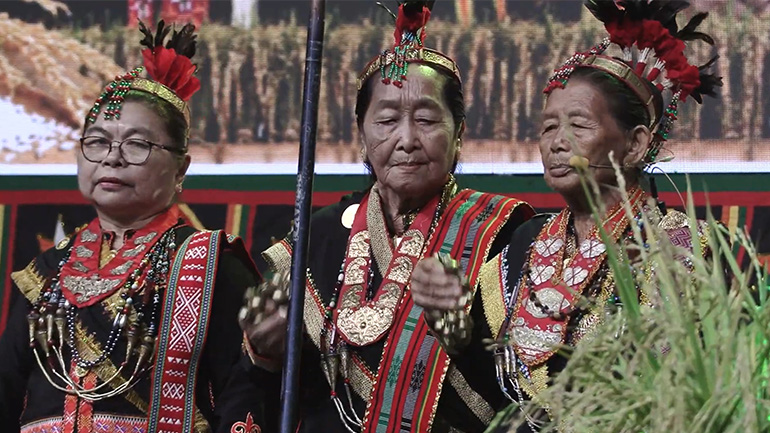


A documentary on an endangered Malaysian oral tradition, known today by fewer than five elderly women, has been produced by a University of Leicester researcher and her Malaysian collaborator working with the Indigenous community it belongs to.
Disappearing Voices of the Lotud High Priestesses in Sabah, East Malaysia explores the implications of the impending loss of a sacred ritual poetry among the Lotud, an Indigenous community of around 20,000 people who predominantly reside in Tuaran, Sabah, Malaysia. Passed down orally by Lotud priestesses, the tradition preserves the community's cosmology, creation myth, environmental ethics and moral values.
Fewer than five knowledgeable priestesses are still living, and they are now aged between 75 and 92. Language loss, religious conversion and wider social change have made it increasingly difficult for the tradition to pass to younger generations, many of whom now have little access to this knowledge.
The documentary is the result of a collaboration between Dr Yunci Cai, Associate Professor in Museum and Heritage Studies at the University of Leicester, and Judeth John Baptist, a member of Sabah's Indigenous community and a longstanding custodian of Lotud cultural heritage.
The two first worked together in 2014, when Dr Cai came to Sabah as a doctoral researcher and served as a research assistant to Judeth John Baptist, then Curator and head of research at Sabah Museum. They have since completed three joint projects and now work as equal partners.
Judeth John Baptist spent 37 years at Sabah Museum researching and curating the ritual practices of Sabah's Indigenous communities, and has written and choreographed nine musicals on the state's cultural heritage. Dr Cai's doctoral research examined the politics of heritage-making among Indigenous communities in Malaysia, including the Lotud.
Working closely with Lotud communities, the team adapted the ritual poetry into a short film intended to make the tradition accessible to wider audiences, particularly young people. Indigenous practitioners in Sabah contributed to the script, casting and performance, and community members approved both the storyline before filming and the final cut before release. The project was funded through the British Council's Connections Through Culture programme.
Dr Yunci Cai, Associate Professor in Museum and Heritage Studies at the University of Leicester said: “Safeguarding heritage is not simply about documenting the past but creating opportunities for communities to carry their knowledge into the future. This film was created with the Lotud community to honour the voices and knowledge of the high priestesses, while making this living heritage more accessible to younger generations. It shows what can be achieved when researchers and Indigenous knowledge custodians work together as equal partners.”
Judeth John Baptist, former Curator at Sabah Museum and the project's Malaysian lead said: “As for me, this documentary is both timely and significant. It is not simply a record of a disappearing heritage, but a tribute to our last remaining Dusun Lotud priestesses. As a member of the Tuaran community who has witnessed the changing cultural landscape, I have spent many years documenting our heritage and raising awareness of its preservation. I hope this film will encourage the Dusun Lotud community to safeguard its knowledge, language, traditions and cultural values and ensure they are understood, respected and carried forward to future generations.”
Florence Lambert, British Council’s Head of Arts and Creative Industries in Malaysia and the project funder said the project reflects the British Council’s determination to create awareness on the importance of heritage preservation.
“These traditional knowledge and practices, which are precious, are eroding all over the world. In Malaysia, it is part of Malaysia’s diverse fabric and provide deep connections with our environment and the spiritual world, which the world needs more of.
“The CTC programme supports artistic collaboration between the UK and countries in the Asia-Pacific and Europe to foster cross-cultural exchange and lasting relationships. I’m glad to see this collaboration between the University of Leicester and Judeth result in an important Sabahan heritage being documented and be made accessible to the next generations,” she said.
A launch event will take place in Kota Kinabalu, Sabah on 5 September 2026, graced by Sabah’s Chief Minister’s wife, Datin Seri Panglima Datuk Hajah Juliah Salag, and attended by representatives from the British Council alongside guests from local cultural organisations and government. Free community screenings will also be held in village halls across Tuaran District.
In the UK, the film will be shown at the University of Leicester's Attenborough Arts Centre on 15 October 2026 as part of a hybrid screening and workshop, with the Malaysian team joining online.
The film will be available in both Malay and English and released under an open licence, so that it can be shared freely with community, educational and international audiences.
The project builds on more than a decade of collaboration between Dr Cai and Malaysian partners working with Indigenous communities to record, preserve and share endangered cultural heritage.