
Admissions queries
+44 (0)116 252 3963
[email protected]
Course description
Course description
The MA/MSc Museum Studies combines rigorous academic research with the practical skills needed to succeed in today's museums, galleries and heritage organisations. Taught by internationally recognised academics at Leicester, one of the world's leading centres for Museum Studies, the programme blends theory and practice to prepare you for a wide range of careers across the sector.
Since 1966, we have helped shape museum practice and research worldwide. Our teaching is informed by internationally recognised research that tackles the major challenges facing museums, galleries and heritage organisations today. In REF2021, Leicester was ranked third in the UK for overall research quality in Museum Studies.
You will learn from academics whose research is influencing national and international debates, from widening access to museums and advancing inclusion to exploring how museums can support ageing populations. This research directly informs your learning, exposing you to the latest ideas, debates and professional practices while preparing you to address the challenges shaping the future of the sector.
Through this course, you will:
- Explore the foundations of Museum Studies
Challenge your assumptions about what museums are and why they matter. Through critical discussion and skills workshops, you will build the research and professional skills needed for your studies and future career. You will also examine museums in their global cultural, social and historical contexts, exploring how policy, ethics, social justice and digital innovation are shaping the sector today.
- Work with objects and collections
From their histories and cataloguing practices to questions of ownership, rights, and care, you will investigate how collections are created and managed. Alongside critical debates, you will gain hands-on experience in handling, documenting, packing, and caring for objects, while reflecting on the different categories of objects and materials, and the changing values and meanings attached to them.
- Engage audiences and communities
Explore how museums can act as agents of social change, engaging with contemporary debates around activism, human rights and social justice. You will develop practical expertise in museum communication, exhibition-making and participatory practice, while studio workshops and collaboration with museum professionals give you the opportunity to design and install an exhibition.
- Have the freedom to specialise
Tailor your degree to your interests and career ambitions while exploring some of the most exciting areas of contemporary museum practice. Whether you are interested in exhibition development, audience engagement, digital innovation, museum leadership, global perspectives or the role of museums in health and wellbeing, you will develop the expertise and practical skills needed for a wide range of careers across the museums and heritage sector.
- Gain professional experience
Apply your learning in practice through an eight-week placement in a museum, gallery or heritage organisation. By experiencing day-to-day museum operations and working on a project developed with your host institution, you could find yourself caring for collections, creating learning programmes or exploring digital innovation. A dedicated Career Development Programme runs alongside your studies, helping you prepare for employment in the sector.
- Undertake independent research
Complete a major research project on a topic of your choice, supported by expert supervision. Depending on your interests, this could take the form of a dissertation, professional report, critique or proposal. You can graduate with either a Master of Arts (MA) or Master of Science (MSc), or choose to complete the taught modules only and graduate with a Postgraduate Diploma (PGDip).
Venice Fellowships at Leicester
Each year students on the course have the chance to take part in the Venice Fellowships Programme, a unique opportunity to spend a month in Venice during one of the world’s most important art and architecture Biennales. If you are awarded a Venice Fellowship, you will receive funding to cover travel, accommodation and associated costs. You will also receive training and mentoring in order to make the most of this experience.
Entry requirements
Entry requirements
In recognition of the diverse employment needs of the culture sector, our admissions process recognises and credits a range of prior qualifications and experiences.
- Either a first class or second class degree, which can be in any subject area
- Or be able to demonstrate equivalent skills and aptitudes through the possession of a professional or vocational qualification and/or the accrual of relevant work experiences. Relevant experience can come from a wide spectrum of work or voluntary environments but clear evidence of this experience must be provided
You should be able to demonstrate a commitment to, or strong interest in, museums, galleries, or other kinds of heritage or cultural organisation.
If you do not have a degree, you will be asked complete an assessment, such as an essay, to demonstrate your readiness for postgraduate study. Clear guidance will be provided on assessment criteria. You may also be required to attend an interview.
English Language Requirements
IELTS 6.5 or equivalent. If your first language is not English, you may need to provide evidence of your English language ability. If you do not yet meet our requirements, our English Language Teaching Unit (ELTU) offers a range of courses to help you to improve your English to the necessary standard.
International Qualifications
Find your country in this list to check equivalent qualifications, scholarships and additional requirements.
Countries listFees and funding
Fees and funding
UK Students
Starting in September 2027
- MA/MSc: £12,850
- PGDip: £10,280
If you are resident outside the UK and the Republic of Ireland, you will need to pay a deposit to secure your place. This will be subtracted from your total tuition fee.
Find out more about tuition fees, scholarships and funding.
International Students
Starting in September 2027
- MA/MSc: £23,650
- PGDip: £18,920
You will need to pay a deposit to secure your place. This will be subtracted from your total tuition fee.
Find out more about tuition fees, scholarships and funding.
Additional costs for UK and International students
You may be required to pay for your own meals and some of the transport costs towards your study visits, although we will try as much as possible to cover the full costs of travel for study visits.
Careers and employability
Careers and employability
Throughout the MA/MSc Museum Studies, you will develop the professional and transferable skills valued across the museum, heritage and cultural sectors.
You will strengthen your communication and critical thinking skills through discussion, collaborative projects and written assignments. Working with peers on student-led group activities will help you learn how to contribute effectively within professional teams, draw on the expertise of others and communicate ideas, needs and concerns confidently to a range of audiences.
Many assessments are designed to reflect professional practice. Across the programme, you will gain experience in communicating in academic, museum and public contexts, adapting your approach to different audiences and purposes.
The course provides opportunities to develop practical museum sector expertise. Through modules such as Objects and Collections, you will gain experience of collections care and object handling, while other modules introduce approaches to audience engagement, cultural management, collections management, project management and interpretive planning. Study visits and fieldwork also allow you to engage directly with a range of museums and heritage organisations, helping you understand contemporary professional practice and further develop professional communication skills.
Independent research forms an important part of the programme. You will develop skills in planning and managing projects, identifying and evaluating reliable sources, undertaking research using appropriate methodologies, analysing evidence and presenting your findings effectively. If you choose to complete a dissertation, you will work closely with a research supervisor while carrying out an extended independent project on a topic of your choice.
Guest lectures from museum and heritage professionals provide valuable insights into the sector, helping you build your understanding of current issues, professional practice and potential career pathways. These opportunities can also help you develop your professional networks and gain inspiration from those working across the field.
By graduation, you will have developed a combination of subject-specific knowledge, practical museum experience, research expertise and transferable skills that can support careers across museums, galleries, heritage organisations, cultural institutions and related sectors.
Work placement (Practice)
A key feature of the programme is the Practice module, an eight-week placement designed to support your career goals and provide valuable professional experience. We work with a large network of UK museums, galleries and heritage organisations to offer a huge range of placement opportunities. Before your placement, you will prepare for the application and recruitment process in a series of sessions designed to support you in developing your CV, preparing for interviews and researching your host organisation.
During your placement, you will gain first-hand insight into the day-to-day operations and realities of working within a museum, heritage or cultural organisation. Through a series of progress reports and a final reflective statement, you will critically evaluate your experience, consider how it relates to your academic learning and reflect on your future career aspirations. You will also develop your ability to produce professional reports, communicate findings effectively and reflect on your own professional practice.
Our Careers and Employability Service is here to support you, with advice on interviews, CVs, work experience, volunteering and more. From Freshers’ Week to Graduation and beyond, they are here to help you reach your professional goals.
Related courses
Related courses
What our students say
What our students say
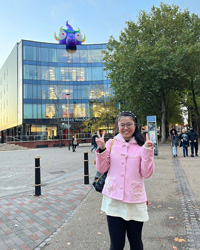 Po Tin Wong, Museum Studies MA
Studying Museum Studies at the University of Leicester has been one of the most rewarding experiences of my life. I come from Hong Kong and have always been passionate about museums and heritage. I chose Leicester because its Museum Studies course is internationally recognised for combining theory with practice and for offering opportunities to gain real-world experience in museums and heritage organisations.
As an international student, I felt supported and included from the very beginning. The University celebrates cultural diversity through events such as Chinese New Year, which helped me feel connected and welcomed. My classmates came from all over the world, many with previous experience in museums, and learning alongside them broadened my understanding of the global museum and heritage landscape.
The course itself is practical and engaging. I developed hands-on skills in researching and curating collections, designing exhibitions, and communicating with audiences. My favourite module was Engaging Audiences, where we worked collaboratively to curate a live exhibition project, gaining insight into the realities of museum work. Group projects also helped me improve my teamwork and communication skills, both of which are invaluable for an international career in the heritage sector.
A highlight of my time at Leicester was working on the 40th anniversary celebration for Glenside Hospital Museum, which included a visit from Her Royal Highness The Princess Royal. It was deeply rewarding to contribute to such an important event in mental health history and to see how museums can foster understanding and connection within communities.
To future students, I would say embrace every opportunity. The Museum Studies course at Leicester equips you with essential knowledge, practical experience, and a supportive network that will help you grow personally and professionally in the museum and heritage sectors.
Integrated AI
Integrated AI
At Leicester, you will study with full access to Microsoft 365 Copilot through our collaboration with global tech leader, Microsoft. As one of the first Microsoft Frontier Universities in the UK, we are helping to shape how AI is used in higher education and the workplace.
You will build practical, transferable skills that employers value. From analysing information and solving problems to communicating ideas and working collaboratively, you will learn to apply your knowledge in a digital world.
When you graduate, you will leave with more than a degree. You will have the skills and confidence to work with the technologies shaping your future.


Course structure
Core modules
Core modules
- Museums, Publics, Power
- Designing for Creative Lives
- Objects and Collections
- Engaging Audiences
- Practice
The modules listed reflect those currently available to students starting in the next intake and may differ from the modules available to current students. Every year, we review our modules and their content to ensure that our courses maintain the best academic and student experience possible. Whilst this does mean elements of your course may change in future academic years, it ensures your course is giving you a research-inspired education and preparing you for your future.
Optional modules
Optional modules
Choose two from:- Cultural Management and Marketing
- Curating Art
- Digital Design (Specialism)
- Heritage (Specialism)
- Learning (Specialism)
- Asian Museologies (Specialism)
- Museums and Health (Specialism)
The modules listed reflect those currently available to students starting in the next intake and may differ from the modules available to current students. Every year, we review our modules and their content to ensure that our courses maintain the best academic and student experience possible. Whilst this does mean elements of your course may change in future academic years, it ensures your course is giving you a research-inspired education and preparing you for your future.
Research
Research
If you wish to obtain an MA or MSc, you will undertake supervised research on a topic of your choice and complete a dissertation, or comparable piece of work such as a professional report or proposal. Sessions in the Research Topics in Museum Studies seminar series and the Research Skills series will equip you with methodological and theoretical skills for your research, including when and how to review the literature, the basics of archival research, and methods of qualitative interviewing and analysis.
You will be supported to choose a research topic that aligns with your interests and you to develop research questions around which you will undertake independent research under the guidance of your research supervisor.
If your research project concerns a science collection or museum, or if the nature of your investigation is 'scientific', you can receive a Master of Science (MSc) degree instead of a Master of Arts (MA) degree.
If you would like to obtain a Postgraduate Diploma, you will complete all of the core modules but not the research module.
The modules listed reflect those currently available to students starting in the next intake and may differ from the modules available to current students. Every year, we review our modules and their content to ensure that our courses maintain the best academic and student experience possible. Whilst this does mean elements of your course may change in future academic years, it ensures your course is giving you a research-inspired education and preparing you for your future.
Why Leicester?
Regular museum and gallery visits across all modules give you opportunities to learn from contemporary practice and apply your knowledge in real-world settings.
An eight-week work placement arranged through our network of placement hosts helps you build professional experience and put your learning into practice.
Hear from more than 30 museum and heritage professionals each year, gaining insights into current challenges, trends and career opportunities across the sector.
Museum Studies at Leicester is a world-leading hub with a reputation for excellence in research, teaching and professional practice.
Teaching and learning
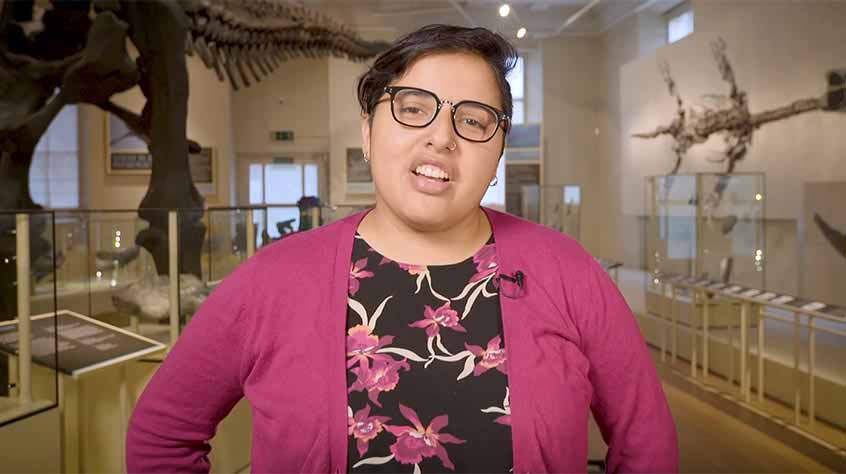
Teaching on the MA/MSc Museum Studies combines lectures, seminars, workshops and practical learning experiences. Lectures introduce key concepts, approaches and debates in contemporary museum studies, while seminars and workshops provide opportunities to explore these ideas in greater depth through discussion, collaborative activities and critical reflection.
Many modules include practical, hands-on learning. In Objects and Collections, you will work with objects in our Museum Studies Welcome collections, developing an understanding of professional approaches to handling, packing and collections care. In Engaging Audiences, you will apply your learning by contributing to the creation of a public-facing installation in our award-winning David Wilson Library Archives and Special Collections or the Attenborough Arts Centre.
Study visits and fieldwork form an important part of the programme. Modules such as Museums, Publics and Power, Objects and Collections and Engaging Audiences include opportunities to engage with museums and heritage organisations, allowing you to explore contemporary practice and reflect on current challenges and developments across the sector.
Each year more than 30 museum, art and heritage professionals deliver lectures, seminars and workshops for our students, bringing current sector insight into the classroom and helping you connect academic learning with real-world practice.
You will also undertake independent study and research throughout the programme. If you choose the dissertation route to complete the full MA/MSc award, you will be supported by a research supervisor as you develop and carry out an original research project. Study and research resources available through our Virtual Learning Environment (Blackboard) will complement research skills training to support you in locating, evaluating and using a wide range of academic and professional sources independently.
Assessment varies across the programme and reflects the diverse nature of museum practice. Depending on the module, assessments may include reports, proposals, professional projects, presentations, installations and a 10,000-word dissertation or equivalent piece of work. You will receive feedback on all assessed work to support your academic and professional development.
During your studies you will have regular contact with your Personal Tutor, a member of academic staff whose role is to get to know you individually, be available to advise you on a wide range of issues related to completing assignments, preparing a dissertation proposal, and planning for your placement and future career.
Key dates
September 2027 start
Deadlines for International applicants requiring a visa to study:
- Application Deadline: 23 July 2027
- Deposit Payment Deadline: 6 August 2027
- CAS Request Deadline: 3 September 2027
- 70% Tuition Fee Payment Deadline: 3 September 2027
Book a webinar
Apply now
| Course | Qualification | Duration | Start Dates | Availability |
|---|---|---|---|---|
| Course Museum Studies | Qualification MA | Duration 1 year full-time | Start Dates September each year |
Availability
Our online application system is currently unavailable. Find out more. |
| Course Museum Studies | Qualification MSc | Duration 1 year full-time | Start Dates September each year |
Availability
Our online application system is currently unavailable. Find out more. |
| Course Museum Studies | Qualification PGDip | Duration 9 months full-time | Start Dates September each year |
Availability
Our online application system is currently unavailable. Find out more. |


I’ve benefited greatly from the extensive range of module topics. They’ve filled my knowledge gaps and have enabled me to have a deeper and better understanding, not only of art museums and galleries, but of the whole art ecosystem.