Centre for Environmental Health and Sustainability
People
Executive board
Professor Anna Hansell, HPRU Director

Anna Hansell is an environmental epidemiologist, with special expertise in health impacts of air pollution on respiratory disease and in environmental noise and health. Her initial career was in respiratory medicine, after which she specialised in public health; she has been working in environmental epidemiology for over 20 years. She has conducted some of the longest running and largest UK studies looking at health effects of air pollution including bioaerosols and is one of a small number of UK epidemiologists investigating long-term health effects of transport noise.
She is a Professor of Environmental Epidemiology and founding Director of the Centre for Environmental Health and Sustainability at the University of Leicester. She is director of the National Institute of Health Research (NIHR) Health Protection Research Unit (HPRU) in Chemical Threats and Hazards at the University of Leicester, working with UK Health Security Agency and the Health and Safety Executive, and also the Environment Theme Lead in the Leicester NIHR Biomedical Research Centre (BRC). Anna holds an honorary consultant post with UK Health Security Agency (UKHSA) and with the University Hospitals of Leicester NHS Trust, and chairs the UK government scientific advisory committee, the Committee on the Medical Effects of Air Pollutants (COMEAP).
Dr Karen Exley, UKHSA Lead

I am Group Leader of Air Quality and Public Health in the Environmental Hazards and Emergencies Department at UK Health Security Agency and an Honorary Associate Professor at the Department of Population Health Sciences, University of Leicester. I am the national lead for UKHSA’s strategic priority programme on Cleaner air.
My research focuses on environmental public health with specific interests in improving exposure and risk assessment of indoor and outdoor air pollution and environmental chemicals. It also includes evaluating the effectiveness of interventions for both indoor and outdoor air quality and translating this knowledge into actionable public health tools and guidance for national and local government and other stakeholders.
I am a member of the scientific secretariat for the Committee on the Medical Effects of Air Pollutants and was an expert committee member for the National Institute for Health and Care Excellence’s Quality Standard on air pollution. I am also a Member of the UK Research and Innovation Strategic Priorities Fund’s Clean Air Steering Committee and a Member of the National Institute of Health Research’s Public Health Research Funding Committee.
Kate Jones, HSE Lead
 Kate Jones is an analytical chemist working as the Biological Monitoring team lead at HSE's Science and Research Centre. She has wide experience and expertise in the biological monitoring of organic compounds, providing a commercial analytical service and delivering training as well as undertaking research including running human volunteer studies. She is a member of HSE’s research ethics panel.
Kate is currently Chair of the RSC Toxicology group. Kate is also a member of the BEI committee of ACGIH in the US, a guest of the German DFG's analytical methods group for biomonitoring and involved in the OECD occupational biomonitoring project. She is a member of ICOH’s scientific committees on Occupational Toxicology, Toxicology of Metals and Industrial Hygiene and the UK National Secretary.
Professor Mick Whelen, Deputy UoL Director
 Mick Whelan is a Professor of Environmental Science at the University of Leicester, specialising in numerical modelling of environmental systems, with a particular interest in the fate of organic contaminants in the environment and their effects on humans and wildlife. He also works on catchment hydrology and the influence of land use on diffuse-source transfers of nitrogen, phosphorus and dissolved organic carbon to surface waters. He is an Associate Editor for the international peer-reviewed journal Soil Research, a member of the NERC Peer Review College, a member of the UK government’s Expert Committee for Pesticides and he chairs the High Level Science Advisory Group for the Department of Agriculture, Environment and Rural Affairs (DAERA) in Northern Ireland. In the HPRU, Mick is Deputy UoL Director, Academic Career Development (ACD) lead and co-leads Theme 3.
Professor Tim Gant, UKHSA Deputy Lead
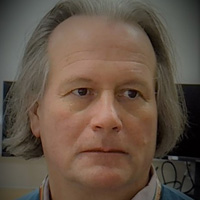 Professor Timothy (Tim) Gant is Head of the Department of Toxicology at UKHSA and Visiting Professor at Imperial College London School of Public Health. He trained in Toxicology and Pharmacology at the School of Pharmacy, University College London (BSc/PhD) and is a European Registered Toxicologist, Fellow and Vice President (President 2026-28) of the British Society of Toxicology and Member of the American Society of Toxicology. He undertook postdoctoral periods with the National Cancer Institute, Bethesda USA (1988 to 1993) and Medical Research Council (MRC) UK (1993 to 2002). He was appointed to MRC tenure in 2002 and served as group leader (2002 to 2011). In 2011 he moved to the Health Protection Agency (HPA), a Non-Executive Agency of the UK government (now UKHSA/Executive Agency) to pursue interests the application of Toxicology in Public Health and training in government and in UKHSA is Head of Toxicology. Within UKHSA he is co-ordinator for the Affiliated Research Centre of the Open University which accredits UKHSA for PhD training under the Open University. He is Co-Editor of Toxicology Letters the journal of the European Society of Toxicology. He currently serves on the Scientific Advisory Board of ECETOC and has previously served on several other advisory boards for different projects and organisations.
Dr Ovnair Sepai, Theme 1 co-lead
 Dr Ovnair Sepai is a Principal Toxicologist at UK Health Security Agency and expert in human biomonitoring, focusing on assessing the impact of environmental exposures on human health. Ovnair has extensive experience in research and policy development, contributing to various national and international projects aimed at understanding and mitigating the effects of pollutants and chemicals in the environment. This includes leading the UK contribution to PARC (European, Horizon funded Partnership for the Assessment of Risks from Chemicals). Ovnair leads team of toxicologists, their core role includes advising UK Government on the impact of chemical pollution in land, drinking water and waste management processes.
Dr Sepai is also a passionate advocate for sustainable practices and the integration of public involvement and engagement on scientific research.
Dr Christina Mitsakou, Theme 1 co-lead
 My background is on Atmospheric/Air Pollution science and I hold a PhD on lung dosimetry of inhaled particulate matter. My research includes estimating personal and population exposure to air pollution and other environmental factors, implementation and development of atmospheric/climate/air quality/dispersion models, exploring interventions aiming to improve air quality and their effectiveness.
My current scientific interests also focus on the performance of health impact assessments and quantification of mortality and morbidity effects from environmental hazards. I am also working on the development of tools that provide surveillance of air pollution and associated health effects, which can be used for evaluation of interventions.
I have been supporting the Committee on the Medical Effects of Air Pollutants (COMEAP) as a member of the Scientific Secretariat and I am involved in a number of advisory activities related to air pollution and its health effects.
Emily Bird, Theme 1 co-lead
 Emily Bird is a Principal Toxicologist at the UK Health Security Agency. Her background is largely in public health and chemical risk assessment, with a particular focus on chemicals and pollutants found in the environment and the impact of these on human health.
She now works primarily on the application of human biomonitoring, with the aim of understanding the health effects of chemicals at different exposure levels and within various populations, with this feeding into Theme 1 of the HPRU. She is a member of multiple projects and groups focusing on the implementation of human biomonitoring both within the UK and Europe.
Her role also involves providing authoritative advice to the UK Government on the impact and human health effects of exposure to chemicals found in contaminated land, drinking water and from waste management processes.
Professor Julie Morrissey, Theme 2 co-lead
 Julie leads the leads the multidisciplinary team investigating bacterial molecular mechanisms involved in the adaptation to environmental stresses, and the impact on virulence and antimicrobial resistance. Our ground breaking research showed that air pollution directly alters the behaviour of bacteria by increasing their antimicrobial tolerance and ability to colonise the respiratory tract. Additionally, we discovered that Staphylococcus aureus acquisition of a novel copper hyper-resistance mechanism, carried on the same mobile genetic elements that confer antibiotic resistance, increases survival to innate immunity. Our work contributes to Theme 2 by increasing understanding of how metal, chemical and air pollutants effect bacterial interaction with the respiratory tract to potentiate infection. Julie is also the Director of the Leicester Microbials Sciences Infectious Disease Research Centre consisting of a community of interdisciplinary fundamental and clinical scientists spanning the university and UHL NHS Trust including Clinical Microbiology and Respiratory Medicine.
Emma-Jane Goode, Theme 2 co-lead
 Emma works in the Bioaerosols team within the Experimental Toxicology Programme at UKHSA. Her research explores how exposure to fungal bioaerosols can affect respiratory health, using laboratory-based airway cell models that reflect allergic and inflamed conditions. Contributing to Theme 2, this work combines the development of new airway models with innovative aerosol exposure methods to better understand how fungal exposure may sensitise the airways and increase vulnerability to air pollution and chemical exposures.
Dr Emma Marczylo, UKHSA Deputy Lead and Theme 2 co-lead
 Emma leads the Bioaerosols team within the Experimental Toxicology Programme, and is the Toxicology Talent Partner and Head of the Toxicology Profession at UKHSA. Bioaerosols are small airborne particles of biological origin (including fungi, pollen, bacteria, viruses). Her team’s research focuses on better understanding what fungi we are exposed to in different outdoor and indoor environments and how they impact our respiratory health. This involves comparing traditional microscopy based with new technologies such as DNA sequencing and automated systems for characterising or monitoring pollen and fungal spores; and using cell models to explore allergic responses of the airways to pollen and fungal spore exposures. This work contributes to Theme 2 by generating new information on what pollens and fungi are present in our air and how they vary over time, in different environments and with changes in climate; and how such airborne exposures can affect allergy and asthma. Emma also champions the Toxicology Profession across UKHSA, driving improved development opportunities for Toxicologists within and outside the organisation.
Tim Marczylo, Theme 3 co-lead
 Currently leads the Analytical Toxicology Programme at UKHSA’s Radiation, Chemical, Climate and Environmental Hazards site in Oxfordshire. The work of this programme falls into two categories: emergency response/incident management and exposure research including omics and bioinformatics. The former is concerned with measurement of toxicants in biological samples and environment during a toxicant-related event. This can be targeted (e.g., lead and lead isotope, arsenic), detection or untargeted including LC-HRMS and GC-HRMS-based exposomics techniques including bioinformatics. The latter includes work focussed upon human and environmental biomonitoring, detection and characterisation of nanomaterials and toxicological investigations through metabolomic and lipidomics techniques using GC- and LC-HRMS. In the HPRU in Chemicals and Hazards I am co-lead of theme III: regulatory and emergency responses to chemicals.
Dr Josh Vande Hey, Knowledge Mobilisation Lead
 My expertise is in atmospheric science and sensing, knowledge exchange, and translation of environmental science into applications in industry and health, with 16 years professional experience in industry and academia. In 2014 I was awarded the Springer Theses “Best of the Best” thesis prize for my PhD work on developing a commercially viable cloud and aerosol sensor, and the same year began my NERC Knowledge Exchange Fellowship on commercial and local policy applications of air pollution science and data. Since then I have been building interdisciplinary collaborations in environment, health and informatics, and co-delivering research with non-academic partners; for example, I am conducting active research with Leicester City Council to underpin local transport policy decisions and public messaging with air quality sensor and model data. I have managed over £1 million of grant funding and over £350,000 of industrial contract research relating to measurement, modelling and mitigation/treatment of indoor air pollution including particulate matter, VOCs and bioaerosols. My measurement expertise includes satellite and ground-based remote sensing of aerosols and trace gases, and low cost in situ sensors. In 2017 I was awarded a British Council Newton Utafiti Institutional Links grant as co-PI with University of Nairobi to develop air pollution monitoring, health impact assessment and mitigation strategies appropriate for the local context in Kenya, as well as air quality science and local government capacity building. I am currently leading a three-year Royal Academy of Engineering project on indoor and outdoor air quality data for longitudinal health research in South Africa with University of Witwatersrand and South African Medical Research Council. I am science co-director for the UK Space Agency’s Centre for Earth Observation Instrumentation (CEOI) and in 2020 I became a senior member of IEEE.
Dr Elizabeth Ralston, PPIE co-lead
 I’m a Behavioural Scientist at the UK Health Security Agency, working in the Air Quality and Public Health tea, within the Environmental Hazards and Emergencies Department. A chartered psychologist with the British Psychological Society, my research applies behavioural science methods and psychological theory to better understand the behaviours that contribute to air pollution and to develop effective ways of communicating the health impacts of poor air quality.
In this Health Protection Research Unit (HPRU) I co-lead the Public and Patient Involvement and Engagement (PPIE) across all themes with Dr Lisa Woodland. Our focus is on ensuring the research is conducted with members of the public and not about or for them. I am passionate about co-design and co-production in research, and I bring previous experience of leading PPIE in clinical studies as well as projects aimed at creating healthier, more sustainable homes by reducing indoor environmental risks. My background in health psychology and particularly qualitative research supports me in effectively fostering meaningful collaborations between the researchers and public members.
Dr Lisa Woodland, PPIE co-lead
 I’m an Environmental Public Health Scientist, specialising in Behavioural and Social Science at the UK Health Security Agency’s Centre for Radiation, Climate, Chemical and Environmental Hazards. I currently work in the Noise and Public Health Team, where a key part of my role is to investigate and understand the complex physiological, psychological, and behavioural pathways linking noise exposure, such as road traffic noise to health outcomes.
I co-lead Public and Patient Involvement, and Engagement (PPIE) across all themes within the Health Protection Research Unit (HPRU). I’m passionate about involving the public in research from the very beginning, through to how and where findings are shared. My background in behavioural and social science shapes my approach to PPIE, with an emphasis on qualitative methods, such as interviews, and on creating open, inclusive spaces to encourage honest discussion. This helps to ensure our research reflects the experiences and needs of the public.
I’m committed to improving public health by combining scientific evidence with meaningful public engagement, so that our research can have greater impact.
Dr Natalie Darko, Research Inclusion co-lead
Dr Natalie Darko specialises in health research and practice that addresses equality, equity, and inclusion of underrepresented and minority groups. She has extensive experience in leading and delivering research within the field of health inequalities, of which her current research projects focus on maternal health, womb cancer, social prescribing, diabetes, faith-based interventions, and dementia. She supports researchers, organisations and practitioners on how to work collaboratively with and for underserved and minority groups to inform equitable health and research practice.
Dr Samuel Cai, Co lead: Research Inclusion, Capacity Development
Samuel Cai was medically trained in preventive medicine and public health, and completed his PhD in the field of environmental epidemiology. His research focuses on understanding the individual and population health impacts of physical environmental stressors, including outdoor and indoor air quality, noise pollution, greenspace, urban forms, and other climate-driven environmental factors. His research has been largely underpinned by using rich population-based cohort data, as well as using increasingly available open-sourced/personal sensor data to characterise the changing environment and population health profiles. His research also extends into the LMICs context where emerging environmental pollution is projected to become a major health threat along with urbanisation.
Rebecca Thorpe, Research Project Manager, UK Health Security Agency (UKHSA)
 Rebecca Thorpe is a Research Project Manager at the UK Health Security Agency (UKHSA), specialising in the coordination and delivery of complex scientific and public-health research programmes within Air Quality and Public Health. She manages the programme within the Chemicals, Threats and Hazards (CTH) Health Protection Research Unit (HPRU), supporting multidisciplinary teams to deliver high-quality research and evidence objectives, managing the delivery of the Forward Business Plans and reporting to the National Institute for Health and Care Research (NIHR) and to ensure alignment to UKHSA strategy and priorities. She also manages the UKHSA Clean Air Programme, leading programme planning, governance, and stakeholder engagement. In addition to her programme portfolio, Rebecca supports major events and cross-agency strategic initiatives, ensuring effective collaboration across internal teams and external partners.
Dr Hayley King, Science Manager
 After completing my PhD in molecular microbiology and epidemiology at the University of Warwick, I continued as a Research Associate before moving into project management and research development roles. I joined CEHS as the centre Science Manager in 2020.