Postgraduate research
Student profile: Joel
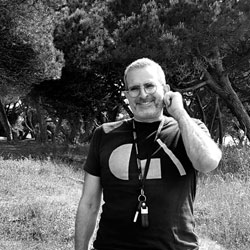 PhD candidate at the School of Archaeology and Ancient History, funded via the AHRC Midlands4Cities Doctoral Training Partnership.
Please tell us about your journey to doing a PhD
My PhD journey was not the traditional one, if such a thing exists. I started my career as an engineer, but I always had a dream of becoming an archaeologist. In 2018, I followed that dream, and after completing my archaeology undergrad at Lisbon, I did my archaeology MA at Leicester. It was during my MA at Leicester that my supervisor challenged me to do a thesis about the archaeology of loneliness. It was a wonderful experience and I realised that this was a topic I really wanted to take forward. The PhD idea followed from that.
Tell us about your PhD project
My PhD investigates the history of loneliness and solitude through archaeology. Although often described as a modern crisis, I defend that loneliness has been part of human life for centuries. I am developing a theoretical and methodological approach to recognise its traces in the past. I will use case studies ranging from Roman graffiti in Pompeii to medieval hermits in Portugal, fishing communities in Newfoundland, and abandoned homes in contemporary Portugal.
These examples reveal how loneliness and solitude have been experienced differently across time and space. My objective is to challenge the myth that the past was free from loneliness, and to identify strategies that can help tackle loneliness nowadays.
What advice would you give to people thinking about applying for a PhD?
A PhD is a significant personal project that can be exciting and challenging at the same time. I suggest choosing a topic that genuinely resonates with you. You will have times when you will doubt your capacities, and you will start questioning if it was the right choice. The good thing is that you don’t have to go through them alone. Your staff and peers will help you overcome those moments, and if the topic really resonates with you, you will continue to move forward. Try to look at your PhD not only as a degree, which is also important, but as a chance to contribute something that reflects who you are and what you care about.