Humanity space
Visiting Fellows
Current Visiting Fellows
Olayinka Fagbemiro
 Olayinka Fagbemiro is a Nigerian space professional, researcher, and advocate for inclusive space collaboration.
With over 19 years of experience spanning international cooperation, space education, and capacity development, her work explores how emerging space nations can shape a more equitable future in space.
At the Leverhulme Centre for Humanity and Space, she will advance research on inclusive international space partnerships and pathways for global collaboration.
Professor Bronislaw Szerszynski
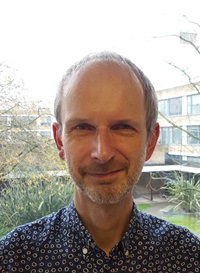 Bronislaw Szerszynski is Professor Emeritus of Sociology at Lancaster University, UK. His research seeks to situate social life in the longer perspective of human and planetary history, drawing on the social and natural sciences, arts and humanities. He is co-author with Nigel Clark of Planetary Social Thought (2021), author of Nature, Technology and the Sacred (2005), and co-editor of Risk, Environment and Modernity (1996), Re-Ordering Nature (2003) and Technofutures (2015). As well as academic publications, his outputs include performances, creative writing and art-science exhibitions and events. He was co-organiser of Between Nature: Explorations in Ecology and Performance (Lancaster, 2000), Experimentality (Lancaster/Manchester/London, 2009-10), and Anthropocene Monument, with Bruno Latour and Olivier Michelon (Toulouse, 2014-2015).
Bronislaw Szerszynski's ORCID profile
Bronislaw Szerszynski's academic biography
Future Visiting Fellows
Tahani Baldwin
 Tahani Baldwin is a PhD candidate in Neuroscience at Brighton and Sussex Medical School. Her research investigates how digital interventions, individual differences, and psychophysiology influence behavioural change within occupational settings.
Alongside her doctoral work, Tahani has a particular interest in the human dimensions of space exploration, including how people experience, interpret and adapt to extreme environments. Her master’s research investigated personality and physiological stress within a virtual Martian environment, during which she also served as Chairperson of the University of Birmingham Astronomical Society.
She later served as a Psychological Officer for Asclepios VI, a lunar analogue mission in the Swiss Alps, supporting crew wellbeing, psychological training and astronaut selection, and has since been appointed Head of Psychology for the programme.
Tahani is also passionate about communicating the human experience of exploration beyond academia. She has written about the psychology of exploration for The Psychologist, examining what experiences in Antarctica can teach us about the psychological challenges of future missions beyond Earth, and was a finalist in the University of Birmingham’s Images of Research competition for her work exploring the psychological effects of long-duration space travel.
Outside of research, Tahani can be found scuba diving off the Sussex coast (weather-dependent), reading science fiction, and hosting events for the Brighton Astronomy Club.
Dr Laura Bullon-Cassis
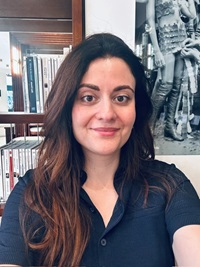 Laura Bullon Cassis is an SNSF Ambizione Fellow at the Geneva Graduate Institute and a Scientific Collaborator at the University of Geneva. She holds a PhD with distinction in Media, Culture, and Communication from New York University, an MSc in Global Politics from the London School of Economics and Political Science, and a BSc in Sociology from LSE.
Her research sits at the intersection of media and communication, science and technology studies, and political sociology. Her work has examined climate politics, political participation, social movements, and the production of knowledge and expertise. She is increasingly interested in outer space as a site from which social and political relations on Earth are being reconfigured.
Her SNSF Ambizione project, The New Stewards: Earth Observation and the Public Private Reordering of Climate Governance, examines the growing role of commercial actors in observing the Earth from space. As space infrastructures become increasingly concentrated in the hands of powerful private companies and billionaire founders, the project asks who gets to observe the planet, how those observations become authoritative knowledge, and what this means for climate governance. Following satellite data from orbit to their uses on Earth, it explores how the commercialisation of space is changing our relationship to the planet below.
Giles Bunch
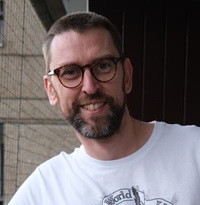 Giles is a social anthropologist. His research examines how human spaceflight speaks to urgent contemporary questions around labour, value, organisation, social change and play.
Giles completed a major body of research as part of the European Research Council funded ETHNO-ISS project at University College London. During this time he carried out anthropological fieldwork with instructors, flight controllers and other ground teams supporting European operations on the International Space Station and the Columbus module.
For the visiting fellowship, Giles is developing a new project called ‘Lunar Labours’, in which he will examine cosmologies of work in the context of current and future missions to the Moon. The project takes challenges to what critics describe as the ‘work society’ as its starting point and draws on Marxist and Marxist-feminist methodologies to assess human spaceflight in the context of 21st Century crises over labour.
Nelly-Helen Ebruka
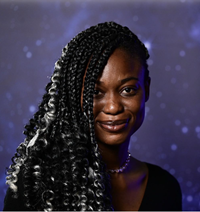 Nelly-Helen Ebruka is a doctoral researcher in Politics at the University of Manchester, UK. Her research examines Africa–Europe space cooperation and the role of African agency in the historical development of the African Outer Space Programme. Her broader research interests include space diplomacy and governance, African politics, and the participation of developing regions in international space cooperation. She holds an MA in Diplomacy and International Relations from St Mary's University, Twickenham, and an LLB from the University of Calabar, Nigeria.
Beyond academia, Nelly-Helen has worked on several initiatives promoting youth participation and engagement in the African space sector. She previously served as Africa Regional Coordinator for the Space Generation Advisory Council (SGAC) and is a co-founder of Learn Space Foundation, an initiative dedicated to promoting space education, awareness and opportunities for young people in Africa.
During her fellowship at LCHS, she will advance her doctoral research and contribute to interdisciplinary discussions on international space cooperation, space politics and equitable participation in outer space.
Emma Horne
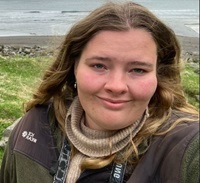 Emma is in the final stages of her PhD at the Centre for the Study of the Viking Age at the University of Nottingham, UK.
Her thesis explores the interactions between landscape, place, and people in the Old Norse-Icelandic Family Sagas.
More broadly, she is interested in environmental studies, onomastics, and cartography, especially within the North Atlantic world.
Dr Alley Marie Jordan
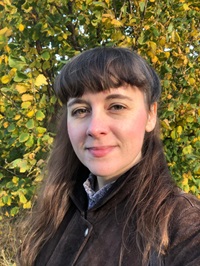 Dr Alley Marie Jordan has a PhD in Classics and is the author of Classical Taste in the Architectural World of Thomas Jefferson (Bloomsbury 2025).
She specialises in classical reception in early modern and modern architecture, with a focus on how classical philosophy influenced American national identites.
She is currently writing her second book, Heavenly Temples: Observatories and Cultural Identity in 19th-Century America. She currently lives and teaches in Scotland.
PD Dr Zoe Lehmann
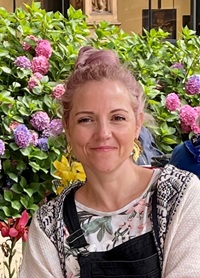 Zoë is currently deputy to the Chair of Modern English Literature at the University of Bern, Switzerland. Her research and teaching are primarily focused on interdisciplinary exchanges in literature, including literature and science, literature and philosophy, and literature and theology. Zoë's first monograph, The Victorian Ghost Story and Theology, was published by Palgrave MacMillan in 2016, and won the 2016 Marie Heim-Vögtlin prize from the Swiss National Science Foundation. Her second book, Travelling Languages: Scientific Discourses in Contemporary British Science Fiction will be published by Liverpool University Press in 2027. Zoë is also the primary editor for the volumes Theology and Literature after Postmodernity (Bloomsbury, 2015) and Our Common Cosmos: Exploring the Future of Theology, Human Culture and Space Sciences (Bloomsbury, 2019). Further publications include numerous articles in peer reviewed journals, as well as chapters in edited volumes. She is series editor of the academic series ‘Religion and the University’ at Bloomsbury, and ‘The Routledge History of Religion and Literature’ at Routledge, and serves on the executive board of the British Society for Literature and Science.
Primarily based in literature departments, Zoë has also held fellowships at the Centre for Space and Habitability (planetary sciences) at the University of Bern, and on the NASA funded project, ‘The Societal Implications of Astrobiology’ at the Center of Theological Inquiry, Princeton.
Rowena Squires
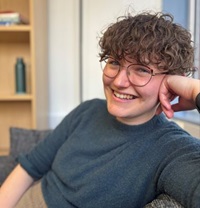 Rowena is a PhD candidate in Education at the University of Cambridge.
Her thesis "‘They’re Following our Script:’ 70 Years of Disney & Outer Space” explores the history of the Walt Disney Company’s role promoting outer space to the US public, from Disneyland’ Man in Space (1955) to Disney-Pixar’s Elio (2025).
Rowena’s research sits at the intersection of cultural history, children’s literature, media studies and the history of science.
Past Visiting Fellows
Raoul Cardellini Leipertz
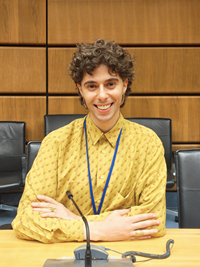 Raoul Cardellini Leipertz is a doctoral researcher in Defence and Security Studies at the School of Advanced Defence Studies (CASD/SSU) in Rome and a Visiting Fellow at the Leverhulme Centre for Humanity and Space. Their research focuses on space law, international security and arms control, with particular attention to the nuclear–space nexus, military and dual-use space activities, deterrence, and the application of international humanitarian law to outer space.
Raoul holds an Advanced LL.M. in Air and Space Law from Leiden University and postgraduate qualifications in International Relations and Politics from LUMSA University, Space Institutions and Policies from SIOI, and European Legal Studies from the University of Perugia, where they also earned their law degree. Their academic work spans the militarisation of outer space, nuclear weapons in orbit, and the legal status of astronauts during armed conflict.
They have undertaken research visits at several European institutions and presented at more than 40 international conferences and workshops. Their research and academic training have received competitive funding from the Italian Ministry of Defence, the European Space Agency, the Italian Space Agency, and other institutions.
Raoul also writes Space, Unromanced, a column for SpaceWatch.Global exploring access, power and inequality in the space sector.