Humanity space
Associate Fellows
Below is a list of the Leverhulme Centre for Humanity and Space's valued Associate Fellows, whose expertise, collaboration, and shared vision play a vital role in advancing the Centre’s mission to explore the intersections of humanity and space.
For more information on how to become an Associate Fellow please contact [email protected].
Deden Habibi Ali Alfathimy
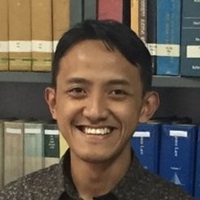 Mr Deden Habibi Ali Alfathimy is an Associate Fellow at the Leverhulme Centre for Humanity and Space.
Mr Alfathimy is a postgraduate researcher in Politics and International Relations, focusing on outer space politics (astropolitics). He is the recipient of a Future 100 PhD studentship from the University of Leicester's Space Park Leicester Institute, under the supervision of Prof Andrew Futter and Dr Sally Horrocks (University of Leicester), and Dr Bleddyn Bowen (Durham University). His doctoral project studies Indonesian satellite communication development to better understand space policy in the Global Space Age.
Mr Alfathimy is currently on study leave from his role as a space policy researcher at the National Research and Innovation Agency (BRIN), Government of Indonesia. He joined the Indonesian space agency (National Institute of Aeronautics and Space/LAPAN) in 2018, which was eventually merged into BRIN in 2021. Since then, he has been working on the international dimensions of Indonesian space policies and programmes by closely informing policymakers, conducting academic research, and advocating for space issues.
Dr Julia Balm
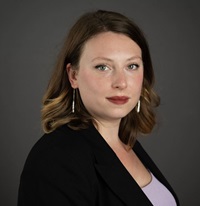 Dr Julia Balm is Co-Director and Research Associate at the Freeman Air and Space Institute in the School of Security Studies, King’s College London.
 She researches contemporary space power with a particular focus on the needs and motivations of current and emerging space powers. She held the first fully-funded FASI studentship from 2020-2023 for a thesis building a theoretical framework for the New Space Age. The result of this research project is a space power theory that utilizes interdisciplinary methods. Julia has advocated for an interdisciplinary approach to the space domain, working across the House of Lords, Ministry of Defence, Secretary of State's Office for Net Assessments and Challenge, and the Defence Academy to deliver research on cross sector strategy and pan-governmental approaches to security challenges.
Julia holds a PhD in space strategy and an MA in Non-Proliferation and International Security from King’s College London as well as an Honours BA from the University of Toronto.
Dallas Campbell
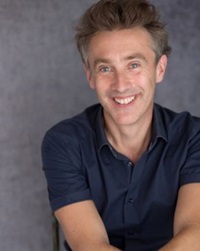 Dallas Campbell is a broadcaster and author who has presented some of television’s highest-profile factual programmes for the BBC and beyond, including: The Gadget Show, Bang Goes the Theory, Supersized Earth, Stargazing Live, The Sky at Night, City in the Sky, Britain Beneath your Feet, Egypt’s Lost Cities and The Science of Stupid. His television work has taken him around the world giving audiences a backstage pass into the hidden workings of the human made world. He’s filmed in some extraordinary locations: rocket launches in Kazakhstan, on top of the Burj Khalifa in Dubai, secret chambers in the Great Pyramid of Giza, Area-51 in Nevada, the bottom of a Mexico City mega-sewer and everywhere in between.
 Anuradha Damale-Day
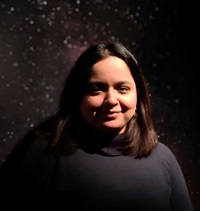 Anuradha Damale-Day is a practitioner and researcher whose work bridges space policy, governance, and innovation delivery. Professionally, she works across complex stakeholder environments to align technical ambition with public value outcomes, with experience spanning government engagement, industry partnerships, and ecosystem strategy.
Alongside her practitioner work, Anuradha is a PhD researcher at University of Leicester examining responsible behaviour in space and how incentives, institutions, and governance frameworks shape sustainable futures in orbit and on Earth. Her wider interests include industrial strategy, dual-use technologies, international governance, and the role of space-enabled systems in national resilience. Her research draws on science and technology studies, governance, and systems thinking. She is an Associate Fellow of the Leverhulme Centre for Humanity and Space.
Dr Francesca Faedi
 Dr Francesca Faedi is an interdisciplinary space leader working at the intersection of space science, society, and innovation, with a focus on the human dimensions of living and working in space.
Based at the University of Leicester and Space Park Leicester, she operates across research, policy, and commercialisation to translate space-enabled knowledge into societal and economic impact.
With a background in astrophysics and over fifteen years of research experience spanning exoplanets, stellar systems, and gravitational wave science, she has contributed to more than 100 peer-reviewed publications and major international collaborations.
Her current work focuses on the socio-technical systems underpinning human life beyond Earth, integrating space science with life sciences, bio-engineering, and human performance research.
She has developed interdisciplinary programmes exploring human adaptation to extreme environments, including collaborations with industry partners such as Spacewear to design wearable systems supporting human activity in space.
Alongside this, she contributes to the development of policy and governance frameworks for the evolving space ecosystem, including work on the equitable use of space resources and responsible innovation in emerging space industries.
Her research also connects space systems to terrestrial challenges, leading policy-oriented work on sustainability, land use, and food systems, demonstrating how space-enabled knowledge can inform societal resilience on Earth.
As Academic Liaison for Commercial and Innovation Activities at Space Park Leicester and Research Lead for the Institute for Space, she leads the development of cross-sector partnerships across academia, industry, and government, translating emerging research into applications, policy frameworks, and future space ecosystems.
Her work aligns closely with the Centre, contributing to understanding human performance, work systems, and inclusivity in space environments, while addressing broader questions of governance, sustainability, and the role of space in shaping future societies on Earth and beyond.
Dr Sarah Jane Fox
 Dr Sarah Jane Fox is a skilled academic-practitioner and thought-leader, with extensive experience in Higher Education and external to it, whereby she has worked in government and consultancy roles.
Dr Fox is currently an academic at Leicester Law School, University of Leicester (UK) and is also a Co-Director for the Institute for Digital Culture.
Dr Fox specialises in law, policy and strategy. She is an internationally recognised expert-specialist in transport and movements (physical and virtual) and particularly, air/aviation, space and road transport modes and systems (including autonomous vehicles) sustainable future use and advancing cyber-connected technologies. This includes safety/security/cybersecurity and defence factors. Her research also includes the social acceptance of evolving technology, engagement and EDI issues.
In terms of outer space, she has researched and written across:
- Governance (international; UK; US and European focussed in the main)
- Resources and mining
- Travel and tourism
- Defence-policing-security
- Telecommunications and satellites
Dr Fox continues to take part in key policy discussions in the United Nations and the EU on technology risks, challenges and opportunities. In 2024 Sarah Jane was a top-20 finalist of the United Nations SDG Game Changer Awards. This accolade honours individuals and organisations that are working towards rescuing the global goals through digital technologies and exemplifies how digital technologies can lay the groundwork for a more sustainable, inclusive and responsible future.
Dr Fox’s ongoing collaborative work relates to technologies used for peaceful purposes, namely to benefits society and protect national infrastructures (from misuse): it is based on sharing policies and guidance, and it was acknowledged within the Peace Category, which relates to building peaceful and inclusive societies (SDG 16 and 17).
Professor John Goodwin
 John Goodwin is a Professor of Sociology and Social Psychology at the University of Leicester who, in the mid 2010s developed the first undergraduate ‘cosmic sociology’ module at Leicester.
His orientation to academic work is rooted in creative practice and incorporates biographical methods, archival research, autoethnography, collaborative autoethnography, visual studies, data reanimation, and poetic inquiry.
He aims to examine space via this sociological lens to enable detailed critical analysis, interpretation, and exploration of space’s everydayness.
In 2019 John wrote a thought piece on the sociological story of space for the University. This can be read here.
Dr Genovefa Kefalidou
 Dr Genovefa Kefalidou (She/Her) is a Lecturer in Human-Computer Interaction in the School of Computing and Mathematical Sciences at the University of Leicester, UK, and an Associate Fellow of the Leverhulme Centre for Humanity and Space. She has a strong multidisciplinary background spanning Computer Science, Systems Engineering, Human Factors Engineering, Human-Computer Interaction, and Psychology.
Her research investigates how user-centred Artificial Intelligence and Mixed Reality can enhance user experience, safety, trust, and decision-making in complex socio-technical ecosystems. She develops theory-, model-, and practice-driven approaches to design and evaluate intelligent, trustworthy technologies, with a particular emphasis on cognitive-driven, human-in-the-loop systems and multimodal interaction design. Her work explores how more naturalistic and anthropomorphic forms of human–AI collaboration can support effective co-production of knowledge and action.
Dr Kefalidou integrates participatory design, ubiquitous computing, and mixed-method approaches to advance human–machine optimisation and contextual awareness. This includes the development of human-centred tools that enhance algorithmic processes, as well as Ambient Intelligence (AmI) and immersive interventions that support adaptive, context-sensitive interaction.
Her research aligns strongly with the Centre’s focus on the future of human experience beyond Earth by examining how humans interact with intelligent and immersive technologies in extreme, remote, and data-rich environments. Her work contributes to understanding trust, sensemaking, and decision-making in conditions of uncertainty, which are key challenges for space exploration, habitation, and governance, whilst also addressing the ethical and societal implications of deploying AI-driven systems in such contexts.
She has applied her research across domains including transport, aviation, healthcare, and digital culture, with a focus on socio-cognitive computing, technology acceptance, and responsible AI deployment. Dr Kefalidou has contributed as Co-Investigator to major national projects funded by RCUK, InnovateUK, Wellcome Trust, and The Health Foundation, as well as European FP7 and Horizon 2020 programmes. She has also served as Co-Investigator and Management Board member of the UKRI Trustworthy Autonomous Systems (TAS) Verifiability Node. Currently, she is Co-Investigator and leads Workstream 5 (Evaluation, Impact, and Best Practice) of the Wellcome-funded I-REACCH project, which aims to improve research culture.
Dan Kendall
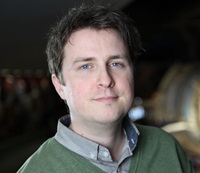 Dan Kendall is Curator and Exhibition Manager at the National Space Centre. His work spans spaceflight, space history, and astronomy, with a particular focus on the human stories that make the subject relevant to visitors.
He curates and manages the Space Centre’s internationally significant artefact collection and contributes to the development of content for the Exhibition, including the delivery of major gallery redevelopments.
He holds a BA (Hons) in History and Archaeology, and an MA in History, from the University of Leicester, where he was awarded the Dr D T Williams Prize for Medieval Scholarship. His work has appeared in the Sunday Times, and he has featured on various television and radio programmes.
Dr Jack Lampkin
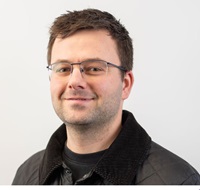 Jack is a Senior Lecturer in Criminology at York St John University. He earned his PhD in Law from the University of Lincoln in 2018 and teaches across criminology, law, policing, and sociology.
His research focuses on how outer space is socially understood, particularly in relation to crime and its regulation beyond Earth. He has played a key role in shaping the emerging fields of space criminology and astro-green criminology.
Jack also examines the environmental consequences of space development and expansion, with particular attention to the effects of satellites and orbital debris on observational amateur astronomy.
He has authored and co-authored several works in this area, including Space Criminology (2023), written with Professor Rob White of the University of Tasmania, and Crime, Criminal Justice and Ethics in Outer Space: International Perspectives (2024), which he co-edited with Dr Yarin Eski from VU Amsterdam.
Sanghoon Lee
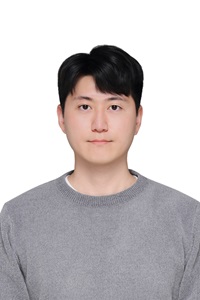 Sanghoon Lee is a postgraduate researcher and Graduate Teaching Assistant (GTA) at the University of Leicester Law School. His PhD research examines international liability for damage arising from commercial suborbital flights, with a focus on the systemic interaction between space law treaties and general international law. His broader research interests include space law and public international law, State responsibility and liability, and international governance of emerging space technologies.
Sanghoon previously worked as a researcher at the Institute of Foreign Affairs and National Security (IFANS), Republic of Korea. Prior to this role, he was a research assistant at the YIJUN Institute of International Law (publisher of the Journal of East Asia and International Law), and for the McGill Manual on International Law Applicable to Military Uses of Outer Space (MILAMOS) project.
Most recently, he served as a research assistant at the 77th session of the International Law Commission (ILC), focusing on the agendas concerning immunity of State officials, due diligence, and compensation for internationally wrongful acts.
Sanghoon holds an LL.B. (First-class) in Law and Global Law from Soongsil University, and an LL.M. in Air and Space Law from McGill University.
Dr Charlotte May
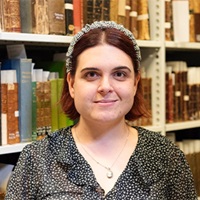 Dr Charlotte May is Impact and Outreach Officer at Manuscripts and Special Collections at the University of Nottingham. Charlotte’s role is centred around making the 3.5 million items in the University’s collections more accessible and discoverable to researchers. These collections encompass the history of the East Midlands as well as global histories and include regional archaeology, literary works of international significance, and educational collections.
 Professor Christopher Newman
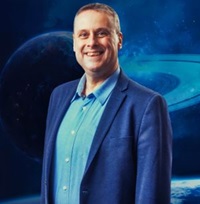 Christopher Newman is a Professor of Space Law and Policy at Northumbria Law School, where he is active in the teaching and research of space law.
Christopher's research covers space governance of the orbital environment, including legal responses to orbital debris, space situational awareness, and rendezvous and proximity operations. His work also examines the law and policy of lunar governance as human activity on the Moon increases.
His forthcoming monograph, Crime, Law and Investigation in Outer Space (Edward Elgar), extends this work into the criminal and investigatory dimensions of human activity in outer space.
Ching Wei Sooi
 Ching Wei Sooi is a Policy Fellow at The British American Security Information Council (BASIC), in the Responsibilities and Global Governance Programme. With a background in space policy and governance, he has a particular focus on the intersection between space and nuclear weapons – the space nuclear nexus – covering cross-domain issues such as risk reduction, arms control, (de)escalation dynamics, deterrence, and the fostering of mutual understandings.
His research and analysis has been published by well-regarded organisations, notably the United Nations Institute for Disarmament Research (UNIDIR), the Secure World Foundation, and Wilton Park. He has lectured at, among others, the RACVIAC Centre for Security Cooperation. Ching Wei is also experienced at using analytical wargaming for research and training, designing and running crisis simulations and tabletop exercises for entities such as the UK Foreign Office (FCDO) and King’s College London’s Wargaming Network.
Ching Wei holds an MA in Peace, Security and International Law from King’s College London, graduating with Distinction, as well as a BA (Hons, First Class) in Political Science and International Relations from the University of Western Australia. In addition, he was an intern with the United Nations Office for Outer Space Affairs under the Office of the Director, and has participated in fellowships run by the SIPRI Summer School in Sweden and the Nuclear Nonproliferation Education and Research Centre (NEREC) at KAIST University, Republic of Korea.