Humanity space
Our people
Find out more about the Leverhulme Centre for Humanity and Space
Meet the people behind the vision
At the Leverhulme Centre for Humanity and Space, our work is driven by a diverse and interdisciplinary team of researchers and collaborators. United by a shared commitment to exploring humanity and space, our strand leads and representatives bring expertise from across the humanities, sciences, and beyond. Together, they shape the Centre’s research agenda, foster innovative dialogue, and ensure our work remains grounded, inclusive, and forward-thinking.
Leadership and Administrative Team
Get to know the dedicated leadership and administrative team behind the Centre for Humanity and Space. Our team brings together expertise, insight, and a shared commitment to supporting innovative research, collaboration, and engagement at the intersection of humanity and space.
Professor Andrew Futter, Centre Director
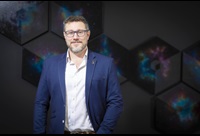
Professor Andrew Futter is world-leading social scientist whose research examines the politics and strategy of nuclear weapons.
Professor Futter is a visionary and dynamic research leader, experienced in managing large research projects, inspiring diverse teams of people, transforming inter-disciplinary academic debates, and working with non-academic partners.
Professor Futter will bring together and lead a multidisciplinary team of scholars and ECRs to maximise the intellectual contribution of the research and develop the next generation of Space experts.
Professor Rossana Deplano, Deputy Director
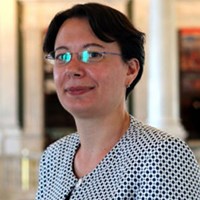 Professor Rossana Deplano is Professor of International Space Law at the Leicester Law School. Her research expertise falls within the area of public international law, in particular international space law, United Nations law, general theory of international law and interdisciplinary research methods in international law.
Professor Deplano is the recipient of a UKRI/AHRC Innovation Scholar Award to conduct an interdisciplinary study at the intersection of international space law and architecture.
She is the Co-Director of the Centre for European Law and Internationalisation (CELI) and a member of the Institute for Space, where she serves as the co-lead for the Life in Space research theme and the convenor of the Humanising Space working group.
Mrs Sally Utton, Centre Manager
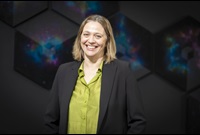 Mrs Sally Utton joined the LCHS team as Centre Manager in February 2026. Sally was previously Research Manager for the Cardiac Imaging Research Group based at Glenfield Hospital.
She has experience in managing research teams, research grants, resource and finances, governance, communication and HR. She has been at the University of Leicester since April 2019.
To contact Sally or the Leverhulme Centre for Humanity and Space please email [email protected] or [email protected].
Ms Laura Nevay, Centre Administrator
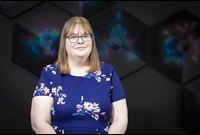 Ms Laura Nevay joined the Leverhulme Centre for Humanity and Space in February 2026.
Laura is a highly experienced administrator and operations professional working in higher education within Oxford University and the University of Leicester. She provides strategic, high-level support to senior leaders, oversees complex operations and budgets, and plays a key role in research, events, public engagement, and organisational development.
Laura is particularly recognised for her work in wellbeing, disability, neurodiversity, and inclusive practice, and has led and contributed to nationally impactful projects and resources used across multiple institutions. Her work is rooted in collaboration, accessibility, and continuous improvement.
To contact Laura or the Leverhulme Centre for Humanity and Space please email [email protected] or [email protected].
Strand Leads and Representatives
Our Strand Leads and Representatives play a vital role in guiding the Centre’s research priorities. Working across disciplines, they represent their strands, support collaborative activity, and ensure each area contributes meaningfully to the Centre’s overarching mission.
Professor Ana Cristina Costa, Living and Working in Space Strand Lead
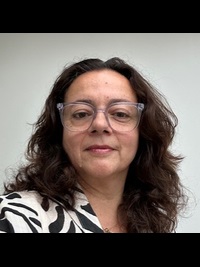 Professor Ana Cristina Costa is Professor of Organisational Behaviour and Director of Research at the School of Management, College of Business. Her work focuses on understanding why team-based collaborations succeed (or fail) in different contexts, and how these are impacted by employment practices, leadership, control, trust, and other factors.
Ana Cristina's research often combines quantitative individual and team data level data with longitudinal panel data. She is particularly interested in the unique intersection of organizational behaviour, industrial psychology, human performance and space exploration.
Previously she has obtained funding from the NASA-Johnson Space Centre in the USA to study team trust in the specific context of extreme conditions endured by NASA astronauts on long duration space missions, and from the Leverhulme Trust Foundation in the UK collaborating with European partners from the University of Valencia (Spain) and University of Maastricht (The Netherlands) to investigate the dark-side of innovation and its impact on employee performance and wellbeing.
Professor Costa is member of several editorial boards and currently serves as Associate Editor of the ABS four-star British Journal of Management.
Dr Scott Davidson, Development, Sustainability and Fairness Strand Lead
 Dr Scott Davidson is a specialist in strategic communication and the current LCHS Development, Sustainability and Fairness strand leader.
Scott's previous research has focused on themes around communication, influence and civic empowerment. Including problems with consensus-oriented communication, connecting empowerment to corporate social responsibility and predicting the main argumentation strategies deployed in lobbying.
Scott is interested in exploring how Earth-Space Sustainability is understood – and contested – and how the societal and environmental implications of space activity are framed, contested, and legitimised across public, corporate, and political discourses. He is the director of EUPRERA Network on Public Affairs and Lobbying in Europe and a member of the UKspace Government Relations Committee.
Dr Raúl González Muñoz, Peace, Security and Governance Strand Lead
 Dr Raúl González Muñoz is a lecturer in Space Policy and Economy at the University of Leicester (UK), Research Lead for the Institute for Space in Space Park Leicester and an Associate Fellow on the Geopolitics of Outer Space at the Academy of International Affairs NRW (Germany).
Raul is also a Board Member of the Spanish Association for Aeronautical and Space Law AEDAE (Spain). Prior to his current positions he was a Scientific Project Lead in Capgemini Engineering and a member of the Space Task Force at the European External Action Service (EEAS) in the European Commission.
Raul holds a PhD in Aerospace Manufacturing from Cranfield University (UK), developed in close collaboration with Airbus, and has conducted studies in Sciences Po University (France) and the Polytechnic University of Valencia (Spain). His research focuses on space policy and economy, space security and defence and European strategic autonomy.
Dr Ben Parsons, Communication, Representation and Experience Strand Lead
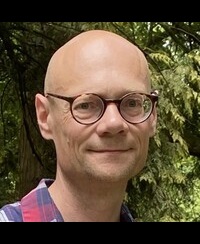 Dr Ben Parsons is a teacher and researcher based in the School of Arts, Media and Communication. He has particular interest in the early history of science fiction, especially neglected traditions and figures, and he leads undergraduate and postgraduate modules on literary and cinematic engagements with space as a source of both wonder and worry.
Ben has published widely on various aspects of medieval and early modern culture, including crime, adolescence, popular religion, satire, and mental illness, and his books include Punishment and Medieval Education (2018), Two Middle English Prayer Cycles (2023) and Introducing Medieval Animal Names (2025).
Ben will lead the Centre's work on cultural depictions of space, and the ways in which they shape and have shaped our understanding of its challenges and potentialities.
Dr Eleanor Armstrong, Early Career Representative
 Dr Eleanor S Armstrong (she/her) is a researcher in the social studies of outer space with an emphasis on queer feminist approaches to representation, geographies, and colonialities of the cosmos.
Dr Armstrong is a Space Research Fellowship at the University of Leicester, UK through their Institute of Space Research, where she leads the research group Constellations Lab: Outer Space & Feminism.
Her first book, Exhibiting Outer Space is under contract with Routledge’s Museums in Focus Series. She has been a visiting fellow at, amongst others, the University of Cambridge, Ingenium Canada’s Museums of Science and Innovation, New York University, Stellenbosch University and University of Vienna; and has held national research grants in the UK, US and Sweden.
Dr Fay Baldry, EDI Representative
Dr Fay Baldry was an Associate Professor of Education at the School of Education and she sits sat the EDI subcommittee for the Universities’ Council for the Education of Teachers. Equality, diversity and inclusion underpin all her work in the field of education, from being an integral part of developing student-teachers through to research focussing on how pupils experience classrooms.
She will focus how different voices are heard within the interdisciplinary spaces, ensuring EDI is an integral part of all aspects of the who, what and how of Leverhulme Centre for Humanity and Space research.
To contact Dr Fay Baldry please email [email protected].
Professor Suzie Imber, Scientist in Residence
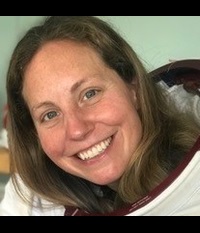 Professor Suzie Imber is a Professor of Space Physics in the School of Physics and Astronomy. She uses a combination of space- and ground-based data sets to study space weather and magnetospheric dynamics at the Earth and the planet Mercury, and she is a Co-Investigator on the Mercury Imaging X-ray Spectrometer on board the BepiColombo mission, which will arrive at Mercury in 2026.
Suzie received the Royal Society Rosalind Franklin Award for contributions to planetary science and her work widening access to Higher Education in the UK.
She is particularly interested in applying existing techniques to new areas of research, for example using her programming skills alongside digital elevation models provided by satellites, to produce the first complete list of mountains in the Andes, and then going to climb many of the unclimbed, high altitude peaks that she had discovered!
Suzie is co-lead of the Space Environment strand of the Institute for Space, has a strong interest in human spaceflight, and is keen to collaborate across discipline boundaries as part of the LCHS. She will be the ’Scientist in Residence’ for the Centre - happy to answer science questions about the space environment, and provide links to the space industry and academia.
Research Associates
Our Research Associates support and deliver research aligned with the Centre for Humanity and Space’s strategic priorities. Through interdisciplinary collaboration, they contribute to project development, knowledge production, and engagement activities across the Centre.
Dr James Aitcheson, Research Associate
Dr James Aitcheson is a writer and researcher working in and between contemporary literature and the history of aviation, astronomy, and space travel.
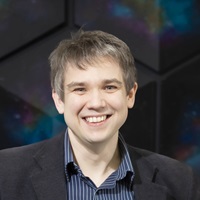
A professional writer since 2010, James is the author of four novels, which have been published in the UK, the US, Germany, and the Czech Republic. The Harrowing (2016) was a Book of the Month in The Times. Dr Aitcheson's creative work has also been shortlisted for the Edinburgh True Flash Award and Historic Photographer of the Year. He has taught Creative Writing at the University of Nottingham and Sheffield Hallam University, and has worked widely with academic and non-academic organisations including The British Academy, English Heritage, and The Literary Consultancy.
Dr Aitcheson's research explores how space was understood in early medieval Britain and Europe (c. 500–1100) and how it is communicated and represented in contemporary literature (since c. 1990).
LCHS Research Focus: Literature’s of Space: Medieval and Modern
Dr Yi-Ting Chang, Research Associate
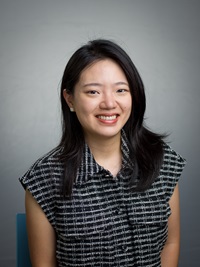 Ms Yi-Ting Chang is a Research Associate at the Leverhulme Centre for Humanity and Space.
Ms Chang is a political geographer of outer space who completed her PhD at the School of Geography and the Environment, University of Oxford as a Clarendon Scholar. In Ms Chang's PhD thesis titled "From Geo- to Astropolitics: Space Engineering, Export Controls, and State-Building in Taiwan," she conducted fieldwork at the Taiwan Space Agency to explore how export controls and technological borders shape the daily lives of space engineers and Taiwan's space missions.
Ms Chang's broad research interests lie in critical geopolitics and science and technology studies (STS). She has been working on vertical geopolitics, focusing especially on power, the body, materiality, and infrastructure in the three-dimensional world. Ms Chang's current project aims to understand the environmental and political geography of space debris and its dual-use governance in East Asia.
LCHS Research Focus: Space Sustainability in East Asia: Regional Cooperation for Peaceful and Sustainable Space.
Dr Lauren Reid, Research Associate
 Dr Lauren Reid is a researcher in the social studies of outer space who explores how life off-Earth is imagined and put into practice.
Working through multimodal ethnography and curatorial practice, Dr Reid is particularly interested in how emerging scientific and technological practices of space exploration and habitation reconfigure familiar Earthly ideas of life, relation, and humanity.
Dr Reid has been a Guest Researcher at Leuphana University Center of Methods and holds a PhD in Social and Cultural Anthropology from Freie Universität Berlin, with a dissertation titled Thinking Beyond the Final Frontier: Cosmic Futures in Thailand. Dr Reid's work has been published in edited volumes including The Routledge Handbook of Social Studies of Outer Space (2023) and Exploring Ethnography of Outer Space: Methods and Perspectives (2025).
LCHS Research Focus: Cosmic Vitalities: Technologies of Life Off-Earth.
Dr Martina Russo, Research Associate
 Dr Martina Russo is a Research Associate at the Leverhulme Centre for Humanity and Space.
Dr Russo is a linguist whose research examines how narratives of sustainability encode values such as care and responsibility. Martina's work pays particular attention to the ways language constructs, represents, and (re)shapes relationships between humans, more-than-human beings, and the environments they co-inhabit.
Dr Russo completed her PhD in Translation, Interpreting and Intercultural Studies at the University of Bologna (Italy) with a dissertation on ecological meaning-making in contemporary nature writing, combining approaches from ecolinguistics, critical discourse studies, corpus linguistics and environmental philosophy.
At the Centre, Dr Russo's work extends these perspectives beyond Earth through the study of space sustainability discourse and ethics. Martina explores how institutional, political, and cultural narratives define sustainability, fairness, and responsibility in the expanding domain of outer space, and how imaginaries from science fiction and related literary genres inform emerging policies and governance frameworks.
Dr Russo has received the Geoff Thompson ESFLA Young Scholar 2025 award for her research on eco-enchantment in nature writing, and a special mention in the Georges Hérelle (I edition) Translation Prize for translating and editing “Maud Howe. Diario di una viaggiatrice: luoghi e identità d’Abruzzo” (Collana Comete-Scie d’Abruzzo, Ianieri Edizioni, 2024).
Dr Martina Russo is an active member of several international research networks at the intersection of language, sustainability, and culture, including CLADES (Critical Language Awareness, Democratic Engagement & Sustainability); the DIS4CHANGE interuniversity research centre; the IEA (International Ecolinguistics Association), and PALA (Poetics and Linguistics Association).
Dr Tara B. M. Smith, Research Associate
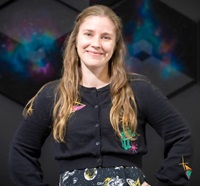 Dr Tara B. M. Smith is an interdisciplinary scholar of religion, science fiction, and popular culture. Working across ethnography, media analysis, and speculative pedagogy, Dr Smith examines how science fiction, gaming cultures, and analog creative practices shape collective ideas of space exploration and human futures. Her research focuses particularly on how awe, ritual, and shared narrative support social cohesion in extreme and isolated environments.
Dr Smith completed her PhD in Studies in Religion at the University of Sydney (2022), where she investigated how science fiction functions as a pedagogical tool for social change. She has held a Postdoctoral Fellowship at the Center for the Study of World Religions at Harvard Divinity School, researching spiritual flow states and imaginative practices within the Warhammer 40,000 universe. Her forthcoming monograph, The Practice of Science Fiction: Assessing Pedagogies for Social Change, is published in Brill’s Constructing Knowledge series.
At the Leverhulme Centre for Humanity and Space, Dr Smith’s project "To the Moon and Back" uses speculative media and ethnographic methods to explore how diverse teams might live and work well together in future space environments. Combining gaming-elicitation interviews, phenomenological analysis, and analog habitat studies, her work contributes to the Centre’s strands of Communication, Representation and Experience and Living and Working in Space. She lives in Leicester with her husband Luke and cats Thomas O’Malley and Momo.
LCHS Research Focus: To the moon and back: Using Science Fiction to Explore Space in the Past, Present and Future
Dr Chris Spedding, Research Associate
 Dr Chris Spedding is a Research Associate at the Leverhulme Centre for Humanity in Space, working at the interface of emerging technology, security, nuclear weapons, and nuclear technologies.
He is an interdisciplinary researcher with masters degrees in Mechanical Engineering (MEng, Sheffield Hallam University) and Nuclear Energy (MRes, Imperial College London), and a PhD in the Governance of Outer Space from The Open University.
Prior to joining the LCHS, Chris was the Emerging Technologies Programme Manager, and Growth and Impact Manager at the British American Security Information Council (BASIC) and was also a civil servant for a time.
His research interests include the evolving character of nuclear competition and conflict, and specifically the role of emerging and evolving technologies in that.
Dr Zoe Swann, Research Associate
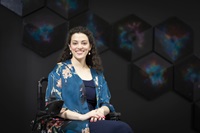 Dr Zoe Swann is a cognitive neurolinguist and Postdoctoral Research Associate at the Leverhulme Centre for Humanity and Space.
Her research (Voice Indicators of Trust, Adaptation, and Cognitive Load in Spaceflight) sits at the intersection of neuroscience, linguistics, and human factors, with a particular focus on the voice as a non-invasive and sensitive indicator of cognitive load, physiological strain, and social adaptation in extreme environments. Dr Swann is especially interested in astronaut health and communication during long-duration spaceflight, including the effects of fatigue, isolation, and limited autonomy on human interaction and wellbeing.
Following the completion of her PhD in Neuroscience from Arizona State University, Dr Swann worked to improve access to care for women, rural populations, and historically underserved groups across indications including stroke, traumatic brain injury, COPD, and coronary microvascular disease. During Dr Swann's PhD, she invented a non-invasive, tele-enabled medical device and app to treat severe post-stroke speech loss, and validated it in participants across the United States.
Dr Swann's calling has always been aerospace medicine research, which shares voice markers and pathophysiology with stroke or brain injury. During the pandemic, she researched the neurological effects of long-duration spaceflight with Mayo Clinic and Johns Hopkins University Aerospace Medicine programmes to develop a pilot exploring speech as a marker of cognitive load and fatigue in astronauts who experience altered neural function due to microgravity.
Alongside her research, Dr Swann is committed to improving research culture and wellbeing in academia. She is an awardee of the I-REACCH (Inclusive Research Environment Achieved through Culture Change) programme at the University of Leicester, which aims to make research more inclusive by making it more joyful and supporting diverse research communities. Dr Swann is keen to collaborate widely across the Centre on interdisciplinary projects that connect space research, health, ethics, and inclusive research practice.
LCHS Research Focus:AVOCADOS - Astronaut Voice Observation to Capture Adaptation, Dysregulation, and Operational Status.