Medieval monks helped spark England’s wool economy, new research reveals
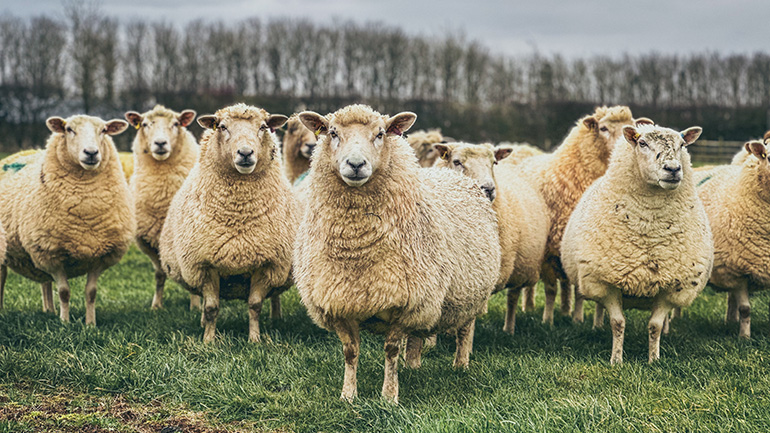
(Credit: Getty)


Medieval monks helped spark England’s wool economy, new research reveals
Monasteries in medieval England may have played a crucial role in the rise of the country’s wool economy centuries earlier than previously understood, according to new research from the University of Leicester and the University of York.
A new study, published in PLOS One, has analysed evidence from 460 archaeological sites across England to build a detailed picture of how cattle and sheep farming changed throughout the medieval period.
The sites span 1,000 years, from 400 AD to 1400. Researchers found that at the beginning of the medieval period, cattle were more common than sheep. However, sheep numbers began to rise during the seventh century, with the increase seeming to originate from newly established monastic farms focused on the production of wool.
This shift would eventually help establish wool as one of the foundations of the English economy for centuries.
Lead author of the study, Dr Matilda Holmes from the University of Leicester, said: “The new monastic communities of the late seventh century appear to have instigated the increase in wool production that underpinned the English economy well into the sixteenth century.”
The research also uncovered evidence of the changing relationship between medieval farmers and their cattle.
Between the tenth and twelfth centuries, older male cattle became increasingly common in the archaeological record. Combined with evidence of changes and deformities to their lower limb bones, the findings suggest that cattle were increasingly being kept as draught animals to work the land.
Dr Holmes said: “The increase in older cattle in the tenth to twelfth centuries was unexpected and implies a real change in the working practices of farmers in that period. It would have relied upon closer working relationships between people and cattle, and it is likely that they were valued members of the workforce.”
The use of cattle as draught animals waned afterwards, with horses becoming the preferred animal of choice. At the same time, growing populations created a greater demand for meat and milk, leading farmers to slaughter cattle at a younger age.
The study used data collected through the Feeding Anglo-Saxon England project. Because archaeological finds are often dated to broad time ranges rather than precise years, the researchers applied a novel statistical method that spread the evidence across those possible dates. This allowed them to track long-term changes in farming more smoothly and accurately than traditional approaches allow.
The approach enabled the team to pinpoint the rise of sheep farming in the seventh century and a peak in the use of cattle for arable work between the tenth and twelfth centuries, followed by changing farming priorities during the thirteenth and fourteenth centuries.
Together, the evidence reveals a medieval countryside in transition. Sheep became increasingly important for wool production, cattle took on a greater role in ploughing the land, and farmers adapted to the demands of a growing population. These changes helped lay the foundations for an economy and landscape that shaped the English countryside for centuries.
The research was carried out by Dr Matilda Holmes (University of Leicester), Dr David Orton (University of York), Professor Helena Hamerow (University of Oxford) and Professor Richard Thomas (University of Leicester).
The paper, Meat, milk, wool and grain: The animal economy of medieval England (CE 400 to 1400), is published in PLOS One.