Leicester team drives global innovation in weight loss and physical function research
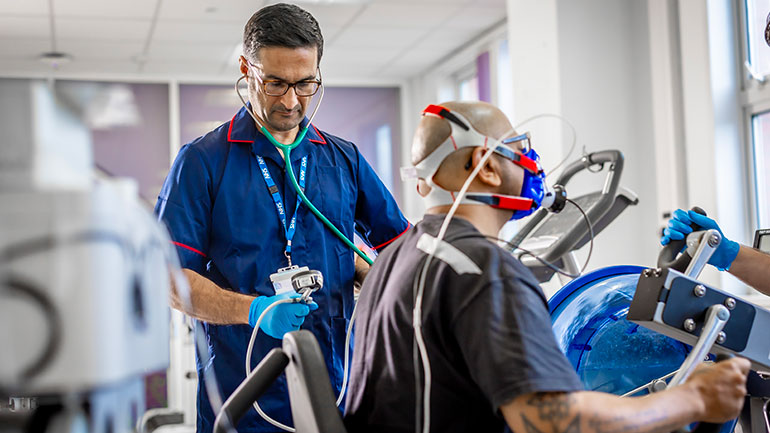
Arm ergometry


Researchers in Leicester are celebrating a major milestone after welcoming the 100th participant to the OPAL trial, one of the world's most innovative obesity research studies.
Led by Professor Tom Yates, Professor of Physical Activity and Health at the University of Leicester and co-theme lead for the Lifestyle theme of the NIHR Biomedical Research Centre (BRC) Leicester, OPAL is a pioneering study investigating how weight loss interventions affect physical function, muscle health and overall wellbeing.
The study is among the first dedicated adaptive platform trial infrastructures for obesity worldwide and has been designed to address one of the major unanswered questions in obesity treatment: how to achieve effective weight loss while preserving muscle mass and physical function.
Professor Tom Yates said: "Reaching our 100th participant is a fantastic milestone for the OPAL trial and reflects the enthusiasm of people who want to help advance obesity research. Every participant plays a vital role in helping us understand how we can improve treatments and long-term outcomes for people living with obesity."
Reaching 100 participants has been a team effort across Leicester Diabetes Centre, with research, delivery and support staff playing a vital role in recruiting and supporting participants throughout the study.
OPAL uses an adaptive platform trial design, a single, flexible study framework that can evaluate multiple treatments and allow modifications based on emerging results while the trial is ongoing.
Professor Yates explained: "In clinical trials, Adaptive Platform Design is an approach that uses a single, flexible study framework to evaluate multiple treatments and allows modifications based on emerging results while the trial is ongoing.
"The adaptive platform design of the OPAL trial is allowing us to compare a range of weight loss approaches, including obesity medications, dietary interventions and exercise programmes concurrently, saving patient and staff time and associated costs."
Researchers in Leicester are particularly interested in understanding how these interventions influence lean muscle mass, an increasingly important consideration as weight loss medications become more widely used.
Professor Yates continued: "While many treatments successfully reduce body weight, they can also result in the loss of muscle as well as fat, potentially affecting strength, mobility and quality of life, which is why it's so important to understand.
"We're around a year into the OPAL trial so far, with more than 100 people currently taking part. The flexibility of a platform trial means we can quickly bring in new interventions to test their impact. For example, we have recently added a new medication to the trial, as well as new protein supplementation alongside existing medication."
OPAL is already being used to evaluate both pharmaceutical and lifestyle interventions and is actively adding new industry partnerships. In 2026, researchers announced a collaboration to evaluate a novel combination therapy involving semaglutide and icovamenib, further demonstrating the platform's ability to incorporate emerging therapies and answer important clinical questions in real time.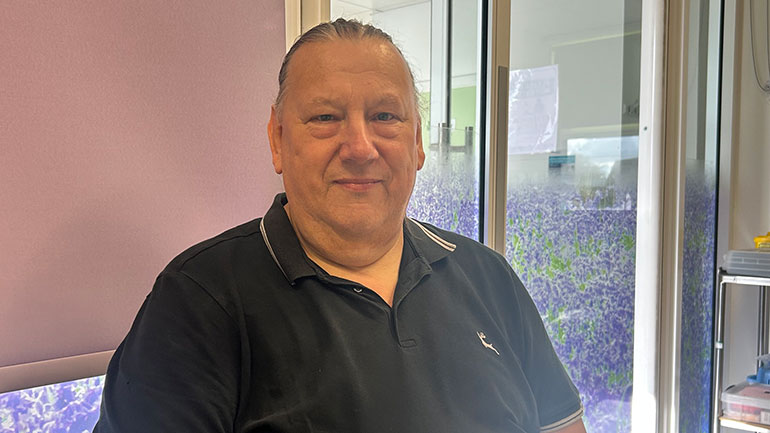
OPAL participant Chris
Chris's OPAL journey:
The success of OPAL is only possible because of participants like Chris, 64, from Chesterfield, who joined the adaptive platform trial hoping to regain control of his weight.
Eight months in, Chris is 20kg lighter, feeling stronger than he has in years, and encouraging others to take part in research that could transform lives.
Chris had been struggling with weight gain and, despite attempts to lose weight, his weight had increased through his 40s and 50s to a maximum of 155kg.
"The weight was also causing me issues with my knees, my energy levels and mobility, and when I was diagnosed with type 2 diabetes I knew I needed to do something about it," he said.
Chris sought support through the NHS app, where he discovered the Be Part of Research service. It was there that he found the OPAL trial, led by researchers at the NIHR BRC Leicester, and quickly expressed an interest in taking part.
Over the last eight months, Chris has participated in the study. He was assigned to the arm of the study where he received monthly injections of tirzepatide, a GLP-1 agonist weight loss medication, alongside structured exercise sessions led by dedicated researchers and exercise physiologists at the Leicester Diabetes Centre at University Hospitals of Leicester NHS Trust.
"The exercise sessions have been the best part," said Chris.
"To begin with I came twice a week, and was given so much help, encouragement and advice that it gave me the confidence to do more at home too."
As well as investigating the effect of medication and exercise on Chris's weight, researchers are also closely analysing his full-body DEXA scans and muscle biopsies to understand the impact on lean muscle mass.
Chris has experienced steady weight loss and has lost 20kg so far.
"I'm really pleased with the weight loss, but I also feel healthier and stronger," he said.
As well as documenting his journey himself, Chris is sharing his experiences in a blog and encouraging others to consider taking part in research."I would say do it, take part in a study. People need research to find more treatments and cures. You could help make this happen."
As OPAL welcomes its 100th participant, stories like Chris's demonstrate the vital contribution volunteers make to advancing research and helping develop more effective approaches to obesity treatment for future patients.
For more information, visit the OPAL Study website.