Leicester journalism students get inside view of reporting from COP31
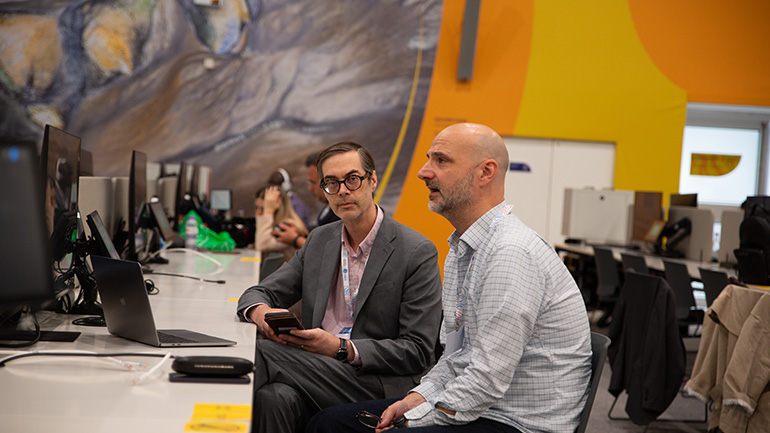
Dr Tim Neff interviews Leo Hickman. (Credit: IISD/ENB I Angeles Estrada Virgil)


University of Leicester journalism students are getting a behind-the-scenes insight into how leading environmental reporters cover one of the world’s biggest international events.
Dr Tim Neff has been putting questions from Leicester students directly to journalists covering the COP31 UN climate conference, allowing them to learn from reporters working at the heart of the negotiations.
A lecturer in Journalism at the University of Leicester, Tim is a writer for Earth Negotiations Bulletin at the International Institute for Sustainable Development and is attending this year’s conference in Antalya, Türkiye.
So far, Tim has interviewed Leo Hickman, Director of Carbon Brief, and Megan Rowling, Editor of Climate Home News.
Their conversations range from the challenges of misinformation and artificial intelligence to the editorial choices behind a finished story, including how journalists write, edit and use material from interviews.
A student’s question about countering misinformation in the age of AI prompted Leo to discuss Carbon Brief’s experience with the technology.
Leo said: “It is a quite interesting position we’re in with AI, because over the last 15 years or so we have built up an archive of, let’s say, 7,000 articles – very high-quality, trusted information about climate change.”
He said Carbon Brief’s reporting was appearing in AI-generated responses alongside trusted sources such as NASA. The organisation makes its journalism freely available under Creative Commons and has chosen not to block AI systems from accessing it.
Alongside questions about AI and misinformation, the interviews explore the practical experience of reporting from the UN climate negotiations.
Tim said: “Students get a taste of what that’s like and learn how these journalists cut through the noise and tell stories in clear, engaging ways for different audiences.
“Students see that the skills they learn in workshops are actually the skills that are put into practice out in the world, such as when Leo mentioned how he thinks about writing and how to use quotes from interviewees when he writes and edits.”
For Tim, the value of hearing directly from working journalists extends beyond the practical advice they share about reporting.
He added: “Most of all, I want students to be able to envision themselves doing this type of work, to know that this is a possible career for them and that they have what it takes to do it.
“Our graduates who are now working at major media outlets, such as Sky News and BBC, are clear proof of that.”
Tim said: “I am not aware of any other Journalism programme, in the UK or elsewhere, that enables students to learn from journalists covering UN negotiations.
“The journalists I interview, with students’ questions in hand, are some of the world’s leading environmental reporters, with deep experience practicing journalism under the most challenging circumstances.”