University of Leicester study reveals rise in retail losses linked to self-checkouts
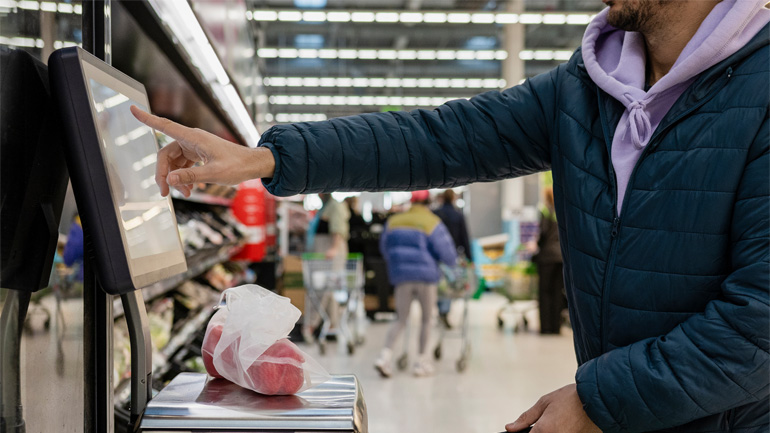




New research by a University of Leicester criminologist has revealed that self-checkouts are now the preferred way for customers to pay, but it is leading to significant losses for businesses.
The study found that 54% of store transactions now go through self-checkouts. However, the research also found that store losses rose 22% on average in the first year that self-checkouts were introduced.
Led by Dr Matt Hopkins, Professor of Criminology at the University of Leicester, the study, commissioned by ECR Retail Loss, is the most comprehensive of its kind, involving 39 participating retailers with a combined annual turnover of €1 trillion.
Research shows that loss at self-checkouts happens for a variety of reasons, ranging from theft to honest mistakes due to awkward items, unfamiliar user interfaces and fiddly barcodes. Customers can become frustrated when items will not read and staff can be slow to help.
Retailers struggle to differentiate between malicious and accidental self-checkout non-scans. Estimates from businesses vary widely from 6% to 80% of losses being attributed to theft.
Missed scans are the most frequent loss type at self-checkouts, occurring in 1% to 4.8% of transactions. Each missed scan costs businesses €2.50 per incident on average.
Product look-up errors, when the wrong item is selected at self-checkout, account for 0.18% to 0.2% of transactions and cost €1.50 per incident.
Walkaways, when a customer does not pay for anything, are much rarer but cost on average €88 per incident.
Interventions by retailers are successful. On-screen prompts asking customers to check or rescan items lead to customer self-correction in more than 80% of cases.
One retailer reported a 28% drop in walkaways after introducing exit gates. Personal display monitors reduced losses by 12%, whilst missed scan identification technology reduced losses by 9%.
Professor Matt Hopkins said: “This is the most comprehensive study of SCO loss to date and includes data from some of the biggest retailers in the world. It adds considerably to our understanding of the impact of SCO and how potential preventative solutions work “.
The full report, Self-Checkout Loss Report 2026: Understanding the scale and nature of loss and the impact of interventions in retail, is available at ecrloss.com.