Leicester part of novel €15 Million UTI research project
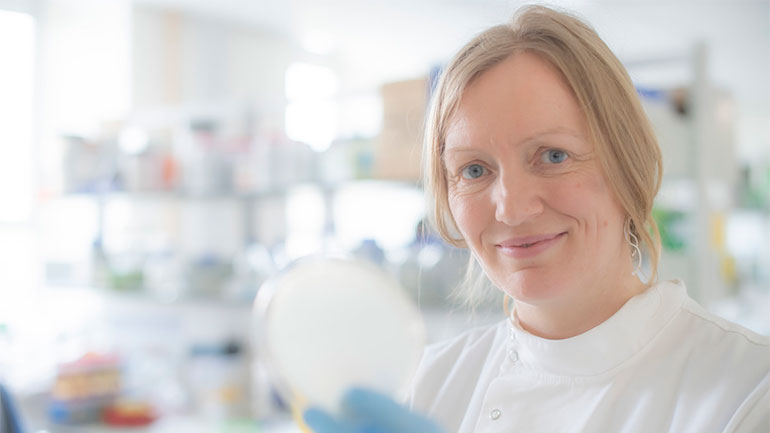
Professor Martha Clokie




Leicester is part of an exciting research team investigating how recurrrent UTIs can be treated using phage therapy and improved gut health.
The research is being funded using €15 million through the European research and innovation program Horizon Europe led by Universitätsmedizin Frankfurt and will be the first randomized clinical trial of its kind.
Recurrent urinary tract infections (UTIs) are among the most common bacterial infections worldwide and are becoming increasingly difficult to treat due to rising antibiotic resistance. One alternative is treatment with viruses that exclusively infect bacteria, known as phages.
Professor Martha Clockie, who leads the University of Leicester’s Becky Mayer Centre for Phage Research, has joined REPhRAME, an international research consortium pursuing a new approach to limit the use of antibiotics and stop the recurrence of infections.
For the first time, a two-step therapeutic approach will be assessed in a randomised clinical trial. First, phages – viruses that specifically kill bacteria – will be used to combat the pathogens. This will be followed by restoration of the intestinal microbiome to prevent recurrent infections. The project began in June 2026 and is planned to run for five years.
Each year, more than 400 million people worldwide develop a urinary tract infection, and in 30 to 50 percent of cases the infection recurs. Since standard antibiotic treatment increases the risk of resistance, many patients find themselves trapped in a cycle of infection, antibiotic treatment, and reinfection, with no lasting solution.
REPhRAME relies on phages because, unlike antibiotics, they act with a high degree of specificity: they attack only the target bacteria while leaving much of the natural microbiota unharmed.
The first treatment step uses a proprietary CRISPR-armed phage cocktail that specifically targets the most common causes of urinary tract infections – certain strains of the intestinal bacterium Escherichia coli – while reducing the likelihood of new resistance emerging.
The second step focuses on restoring the gut microbiome. INTESTIFIX 001, a product of the Cologne Microbiota Bank, transfers stool bacteria from healthy donors to help re-establish the natural balance of the intestinal microbiota. The goal is to provide long-term protection against recurrent infections.
At the heart of the project is a multicenter clinical trial across Europe that will systematically evaluate the safety and effectiveness of the new treatment. Three approaches will be compared: phage therapy alone, phage therapy combined with antibiotics, and phage therapy followed by microbiome restoration.
“Recurrent urinary tract infections place a substantial burden on patients and healthcare systems, yet existing treatment options are simply insufficient for many affected individuals,” says Professor Maria J.G.T. Vehreschild, Head of Infectious Diseases at Universitätsmedizin Frankfurt and overall coordinator of the project.
“REPhRAME aims to transform phage therapy from a promising research concept into a clinically validated treatment option – with robust data on safety, efficacy, and implementation. In doing so, we hope to lay the foundation for integrating phage therapy into routine medical practice across Europe.”
At Leicester, Professor Martha Clokie and the Becky Mayer Centre for Phage Research will study how E. coli responds to phage treatment during the REPhRAME trial, including how the phages work with antibiotics, whether bacterial resistance occurs and how this changes the bacteria.
Professor Clokie said: “Leicester will also help interpret these responses alongside immune and microbiome data, and identify additional phages that could target strains not covered by the initial treatment or bacteria that become phage-resistant. This work will help guide how future phage therapies can be updated and improved for clinical use.”
Led by Universitätsmedizin Frankfurt, the consortium brings together 16 partners from academia, clinical research, and industry across eight European countries. Together, they combine expertise in infectious diseases, clinical trials, phage therapy, microbiome research, microbiology, bioinformatics, regulatory science, drug development, and patient-centered research.
Partners include:SNIPR Biome (Denmark)
Fraunhofer-Gesellschaft (Germany)
German Center for Infection Research (Germany)
Hannover Medical School (Germany)
LINQ management GmbH (Germany)
University Hospital Cologne (Germany)
HUN-REN Biological Research Centre (Hungary)
Riga Stradiņš University (Latvia)
Leiden University Medical Center (Netherlands)
Jafral (Slovenia)
Swiss Institute of Bioinformatics (Switzerland)
University of Bern (Switzerland)
Balgrist University Hospital, University of Zurich (Switzerland)
University of Leicester (United Kingdom)
University of Reading (United Kingdom)