As billionaires descend on Davos, Oxfam uses University of Leicester project to illustrate obscene levels of wealth inequality
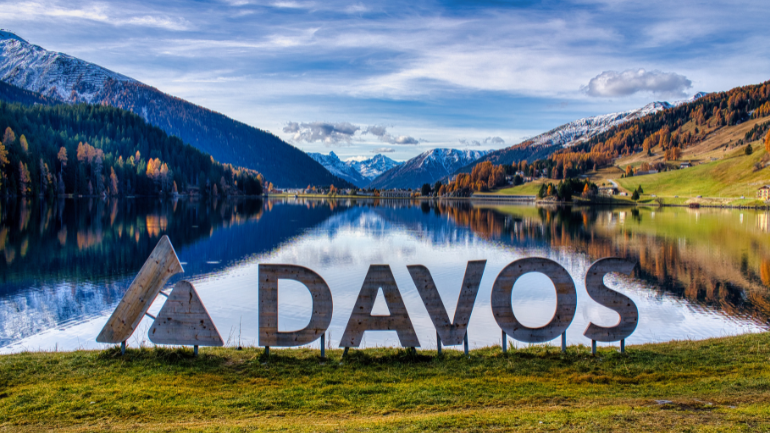




Anti-poverty charity Oxfam has turned to a University of Leicester research project to communicate obscene levels of wealth inequality.
The charity has launched a tracker which counts how much money billionaires are making every second, and what that money could pay for.
The tracker forms part of Oxfam’s report, Resisting the Rule of the Rich: Defending Freedom Against Billionaire Power, which was launched on Monday to coincide with the start of the World Economic Forum, in Davos.
The tracker’s data is driven by The Government Revenue and Development Estimations (GRADE) tool, a research project from the University of Leicester and the University of St Andrews. The model translates what increasing or decreasing government revenue has on the Sustainable Development Goals (SDG). The tool is a game-changer for those who want to communicate the impact of increasing or decreasing government revenue. It’s been used, for example, to model the impact of reducing the debt burden of the poorest countries, the harm caused by tax avoidance and the benefits from a fairer tax system.
Professor Stephen Hall, from the University of Leicester School of Business, is co-lead on the GRADE project and is the sole architect of its model building.
He said: “The GRADE model shows how extra government revenue would translate into improved human welfare in every country in the world. It has been widely used by advocacy groups such as Oxfam, the tax justice network, debt justice and many other groups.
“To see Oxfam utilising it during the World Economic Forum, which attracts billionaires from around the world, has been heartening to see, and I hope it will help people to comprehend the wealth inequalities that exist.”
At every billion-dollar milestone, the website shows two tiles with what that money could have been spent on.
The red ones are luxury items. A billion dollars could buy Buckingham Palace. For $25 billion, which billionaire will have made by day 3 of Davos, they could fill 200 Olympic-sized swimming pools with champagne. For $35 billion, what billionaires make in a week, they could buy all the art in the Louvre.
The green tiles are the ones that use the GRADE data, showing what the governments of low and lower-middle-income countries could do if they had this extra revenue, alternating between various SDG related indicators.
Oxfam’s report has found the number of billionaires has surpassed 3,000 for the first time, and the level of billionaire wealth is now higher than at any time in history. Meanwhile, one in four people globally face hunger.
Professor Hall’s GRADE co-lead is Dr Bernadette O'Hare, Reader in Global Health in the University of St Andrews’ School of Medicine.