First skeletal evidence of leprosy in British red squirrels revealed by University of Leicester study
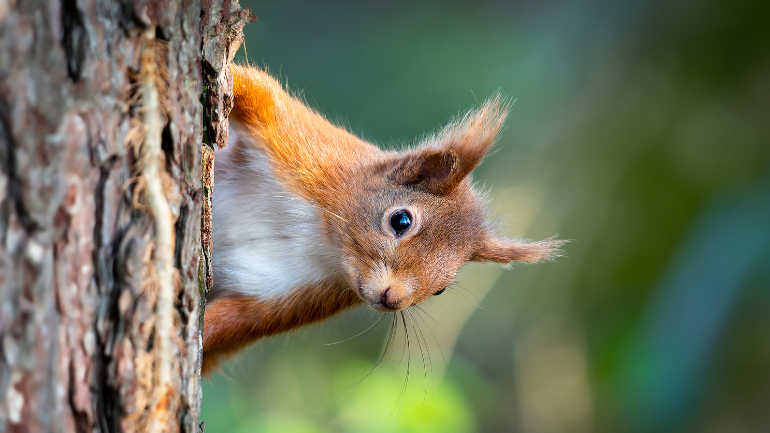




The first-ever skeletal evidence of leprosy in British red squirrels has been identified in a University of Leicester-led study.
The research offers critical new insights into how the disease affects wildlife and how it can be detected in both modern and archaeological remains.
Leprosy is a chronic infectious disease which attacks the skin, nerves and mucous membranes. This eventually leads to white patches, numbness, muscular weakness and paralysis in humans. In 2023, there were 182,815 new cases in humans reported from184 countries and territories.
While leprosy in red squirrels has been documented previously through soft‑tissue analysis and molecular testing, this new research is the first to demonstrate how the skeleton is affected by leprosy infection in non-human/primate animals.
The study showed that three red squirrels with confirmed leprosy (Mycobacterium lepromatosis) from Scotland had cranial lesions showing porosity, bone loss, and remodelling and damage to limbs and paws consistent with neuropathy and secondary infection.
The results show red squirrels experience skeletal changes nearly identical to those found in humans with leprosy. The study also confirmed Mycobacterium lepromatosis produces the same skeletal effects as the other causative pathogen, Mycobacterium leprae.
Lead researcher Elliot Elliott, a PhD researcher in Leicester’s School of Heritage and Culture, said: “Our research establishes the first comprehensive skeletal diagnostic criteria for leprosy in non-human mammals and provides a framework for identifying the disease in wildlife and archaeological remains.
“The study indicates the need for further research into other rodent hosts and disease progression, which could, in turn, lead to advances in treatment of the disease in humans.”
The study follows previous University of Leicester research which found new evidence from medieval archaeological sites showing English red squirrels once served as an important host for mycobacterium leprae strains also responsible for leprosy in humans.
Elliot is one of the University of Leicester’s Future 100 PhD researchers. In 2022 the University committed £9m to fund 100 of the next generation of world-changing researchers as part of its centenary. This year sees the Future 100 PhD projects, like Elliot’s, come to fruition. In 2023, the University committed a further £5.5m for 50 more funded doctoral opportunities, known as the Future 50.