University joins national group dedicated to tackling world health issues
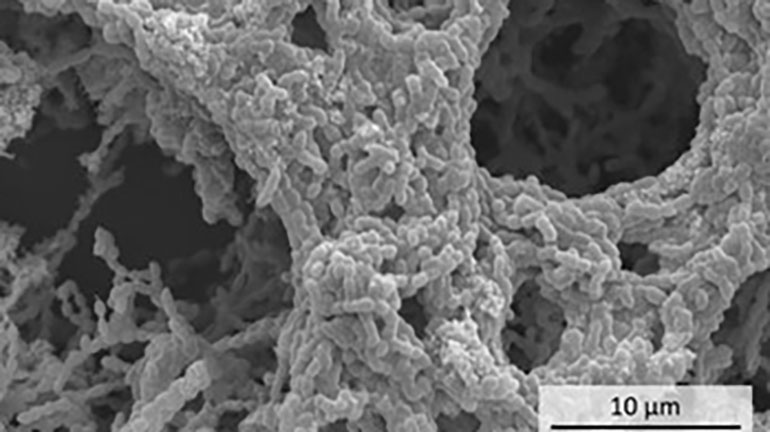
Scanning electron microscope image showing the impact of particulate air pollutants on bacterial Streptococcus pneumoniae biofilms. Image taken by Natalie Allcock, CLS Electron Microscopy Facility.




The University of Leicester has joined a consortium of research institutes dedicated to tackling disease, climate change and food security.
The National Biofilms Innovation Centre (NBIC) is led by four core Universities (Edinburgh, Liverpool, Nottingham and Southampton). The centre works collaboratively to understand the mechanisms of life, from molecular levels to ecosystems. In doing so it aims to find solutions to global challenges including antimicrobial resistance (AMR).
Biofilm research focusses on the specific study of microorganisms such as bacteria and fungi that are encased in protective extracellular polymeric substances (EPS) such as sugars, proteins and DNA.
This EPS matrix shields microbes from the immune system and antibiotics, making the issue of tackling growing levels of antibiotic resistance a top priority for the World Health Organisation.
NBIC, which launched in 2017, brings together research institutions and companies dedicated to advancing biofilm science and ensuring that research creates practical, real-world solutions.
It is funded by the Biotechnology and Biological Sciences Research Council (BBSRC) and Innovate UK.
Professor Julie Morrissey, Director of Leicester Microbial Sciences and Infectious Disease Centre (LeMID), an interdisciplinary cross-University research team in association with University Hospitals of Leicester NHS trust, led the consortium application.
She said: “A third of all deaths are due to infectious disease, highlighting the importance of studying microbiology and other related fields. We hope to utilise our expertise within this growing consortium to help solve real world problems. We’re incredibly excited for the University of Leicester to be part of this important group not just for LeMID but for the entire University community conducting relevant research. Through collaboration, we can find the solutions we need.”
Professor Jo Slater-Jefferies, is Chief Executive of NBIC.
She said: “Over the last eight years we have built a truly national platform for biofilm innovation, uniting leading universities, research institutions and industry partners to accelerate discovery, strengthen collaboration, and translate world-class research into real-world solutions. What we are seeing is more than growth; it is the creation of an ecosystem that will shape the future of biofilm science and deliver lasting impact for industry, society and the global research community.”