Jobs created and organisations helped to thrive thanks to social entrepreneur scheme spearheaded by University of Leicester collaboration
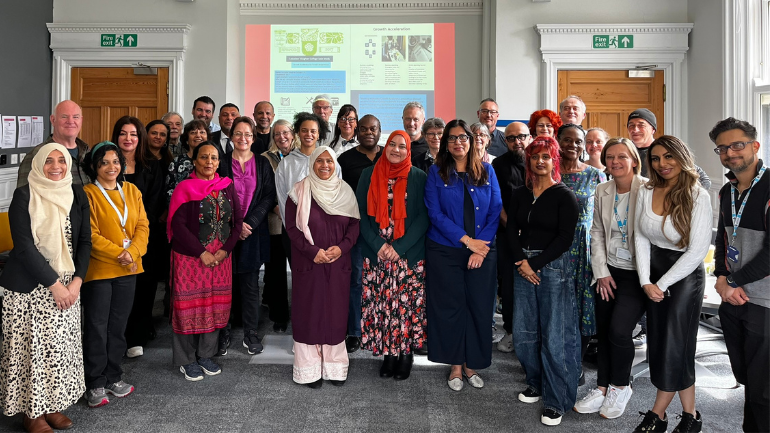
The celebration to mark the successful culmination of the Growth Accelerator programme.




A growth and innovation programme delivered by the University of Leicester, in partnership with CASE and Community Enterprise Engine, has helped more than 100 social entrepreneurs to thrive – and created 19 jobs.
A celebratory event was recently held to mark the culmination of the Growth Accelerator for Social Entrepreneurs programme, which saw 112 Leicester-based social enterprise, charity and community interest company leaders take advantage of the fully funded support it offered.
As a direct result of the support, at least 19 jobs were created, over 200 were protected and 21 enterprises received grants to grow. Nine new enterprises were also created, while 23 developed new or improved products or services. Forty enterprises also engaged in new markets, while 14 experienced a rise in productivity. All 112 also adopted some form of new technology or processes.
The programme, which ran from December 2023 to March 2026, was funded by the UK Government via Leicester City Council, with the objective of growing local businesses with social purpose and protecting and creating jobs.
Support offered included intensive 1:1 business consultancy, themed masterclasses, peer growth circle meetings, funding fairs and social hackathon activities.
One organisation to benefit was Jamila’s Legacy, which seeks to increase awareness and deepen understanding of mental health issues.
Its director, Rehana Sidat, said: “We have been through a period of rapid growth and needed a plan to manage our growth and set out clear priorities for the next three years. The strategic planning process enabled us to stop and review our current work streams and income streams, as well as assess the organisation’s strengths, weaknesses, risks and opportunities. We feel very confident about the future and the plan has given us more structure to deliver and grow our services.”
Another organisation to benefit was Live Cancer Free, which is dedicated to saving lives by helping people make healthier lifestyle choices. According to its director, Dr Abeer Kholghi, its income has doubled as a result of the programme. She said: “Being part of the Growth Accelerator project has made a real difference to Live Cancer Free. It helped us grow in confidence, think more strategically, and connect with other organisations in our field. The relationships and support we gained were invaluable. The funding fairs was also very helpful. They gave us a clearer understanding of what funders are looking for and encouraged us to apply more confidently. Since taking part, our annual income has more than doubled. We truly feel that the organisation has grown stronger as a result of the programme.”
Founder of the New Parks Community Mission Food Bank , Donna Elliott, said the programme had ensured the organisation’s long-term future.
She said: “One of the most significant highlights was our social hackathon. Seeing teachers, charity partners, business leaders, and trustees all collaborating with us was a moment of pure unity and clarity. It resulted in a robust three-year strategy that will take us from 2026 through to 2029.”
She added: “The financial learning was a personal mountain to climb, as I previously lacked the formal skills and education in this field. Alongside our treasurer, who has also upskilled, we have managed to raise thousands in funding and significantly boost our social investment over the last 12 months. We are proud to have established a £5,000 retainer following Charity Commission best practice, ensuring our long-term sustainability. Our verified social return on investment stands at 33-1. Knowing that every pound invested in us saves £33 for the public purse by preventing hospital readmissions and stabilising complex care cases brings me a profound sense of pride. I now fully understand the importance of financial growth as a vehicle for our social mission.”
The programme was led by Professor Mohamed Shaban, Associate Dean of Enterprise at the University of Leicester School of Business.
He said: “The programme has evidenced outcomes including strengthened governance, diversified income stream, new products and markets, job creation and safeguarding, new enterprise formations, and has resulted in impactful collaborations between participating leaders.
“Activities involving stakeholders and the wider VCSE sector such as the annual Social Investment Funding Fair and social hackathons have delivered measurable value, while participants continued to achieve growth and community impact beyond the funding period, demonstrating lasting legacy and system-level benefit.
“While the funding has ended, we’re delighted to continue to support the sector with our partners, CASE and Community Enterprise Engine on a pro bono basis for a further year. In addition, we are committed to supporting the sector through impact-driven research initiatives that inform discussions on its challenges and opportunities. A multidisciplinary team from the University of Leicester is currently working on new research ideas to provide valuable insights for the sector and policymakers.”