Museum Studies at Leicester
Current Fellows
Our 2026 Venice Fellows
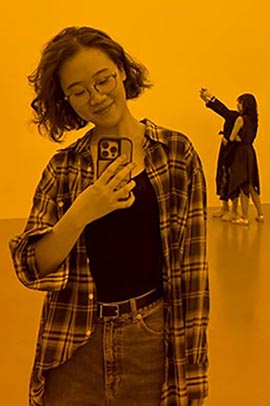 We are proud to share that our two Venice Fellows, Tina Wu and Emmanuel Odogwu, have returned after completing a successful month in Venice as part of the British Council Venice Biennale Fellowship Programme.
The Fellowship gives students the opportunity to spend a sustained period of time at one of the world’s most important international art events, working with the British Pavilion while also developing their own research and creative projects. This year, Tina and Emmanuel worked with Lubaina Himid’s exhibition Predicting History: Testing Translation at the British Pavilion, while developing projects shaped by their own research interests and creative practice. Their projects show the value of the Venice Fellowship as a space for close engagement with contemporary art and international exhibition-making.
Tina Wu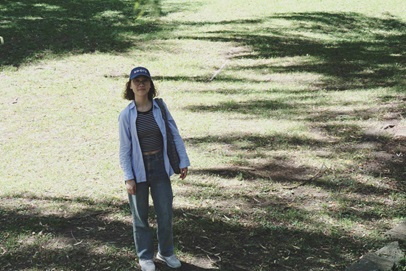
Born in Taiwan, I left home for the first time at twenty-two to study in the United Kingdom, and I am now spending time in Venice during the Biennale. I have come to understand this journey as a movement between different island-like conditions, where the island is not simply a geographical unit, but also a mode of existence shaped by borders, solitude, and forms of belonging.
Inspired by the Renaissance isolarii, or ‘books of islands’, my project takes the form of a contemporary zine. Responding to the "26 Questions for Today’" posed by Lubaina Himid in Prediction History: Testing Translation at the British Pavilion of the 2026 Venice Biennale, the project explores questions of movement, curiosity, and home-making across different places, languages, and relationships.
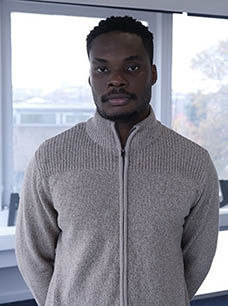 Emmanuel Odogwu
Through my research at the Venice Biennale I'm examining how the British Pavilion, through Lubaina Himid's exhibition, frames Black British visibility within the wider ecology of Black, African, and diasporic representation across the Biennale. Through observation, spatial analysis, and audience engagement, the study explores how curatorial strategies,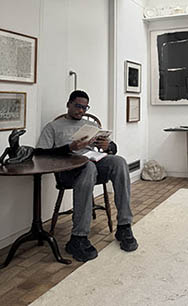 exhibition design, architecture, and visitor movement shape the interpretation and experience of Black contemporary art.
Alongside my dissertation, I am developing a creative and sensory mapping project that includes a triptych painting exploring water as a source of spirituality, history, and memory in relation to Black history of migration, reflection, and belonging. Accompanying this is a video installation that pays homage to water as both a living presence and a storyteller, drawing on themes of folklore, and cultural memory and the symbolic power of water. Together, these works invite audiences to engage with water not only as a physical element but as a carrier of cultural memory and lived experience.