College of Social Sciences, Arts and Humanities
The University of the West Indies, University of Leicester and University of Alberta International Summer Institute
The 2026 Summer Institute will take place at the University of West Indies, Cave Hill, Barbados and will be hosted by the Department of Cultural Studies on 25–30 May 2026.
The International Summer Institute is a week-long intensive programme for PhD candidates and early career researchers from the Caribbean, the UK and Canada. PhDs and ECRs from other countries are also welcome to apply. We encourage delegates with an interest in global studies and a background in any discipline across the arts, humanities and social sciences.
The 2026 Summer Institute will take place at the UWI, Cave Hill, Barbados on the theme of Intangible Heritages, Sacred Spaces.
This overarching theme will cover topics such as:
- Sacred Arts and Architecture
- Sites of Memory and Conscience
- Arts, Embodiment and the Environment
- Sacred Histories and Literatures
- Ritual and Performance
- Visual and Embodied Arts
- Indigenous Heritages
- Spiritual Geographies
- Reparation and Religion
- Heritage and Decolonization
- Land Spirits, Land Tenure
- Ancestral Intelligence
- Healing and Wellness Practices
- Psychological and Social Practice
This will mark the sixth year of this unique summer programme and we are delighted to welcome the University of Alberta as a formal partner.
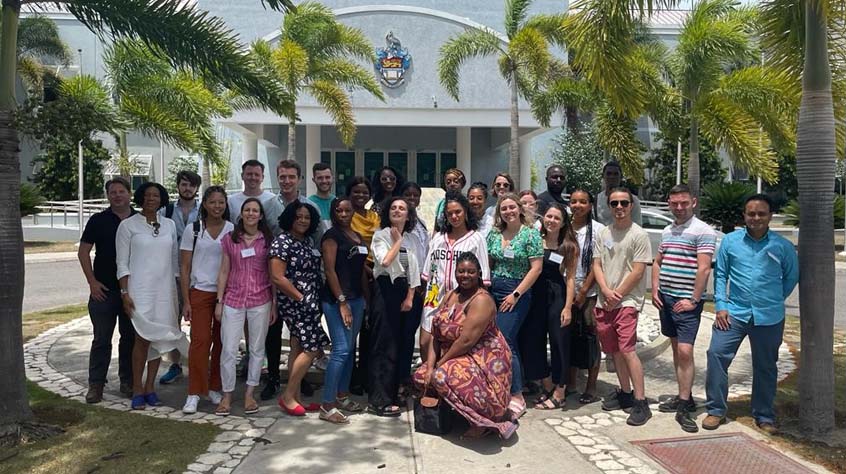
Why join the International Summer Institute?
- Gain an opportunity to network with postgraduate students and early career students from across the Caribbean, the UK, Canada, and beyond
- Develop your knowledge of and interest in global studies through participation in academic seminars and interactive lectures
- Enhance your CV by attending integrated professional development workshops
- Experience the University of the West Indies' dynamic research culture in the arts, humanities and social sciences, and gain access to its facilities
- Gain experience of and mentorship in scholarly publications (see this special issue)
Summer Institute aims
- Provides postgraduate students and early career researchers from the Caribbean and the UK with opportunities for both intellectual and professional development
- Creates international networking opportunities and an organized study abroad experience for participants
- Enhances your awareness of the benefits and challenges of interdisciplinary research
- Offers you insights into current high profile collaborative research projects led by UWI, UoL and UofA academics
Course contents
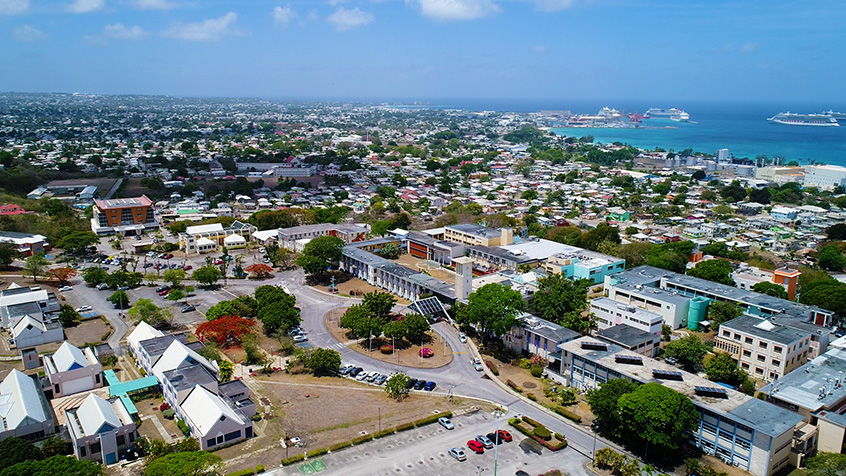
- Lectures, workshops and field trips relating to this year's theme of Intangible Heritages, Sacred Spaces at the UWI Cave Hill campus and the local area.
- Professionalisation workshops
- Contributions from established UWI, UoL and UofA-based scholars working in various disciplines across the arts, humanities and social sciences.
- The opportunity to present a paper and receive peer and instructor feedback
Dates and location
25–30 May 2026, University of West Indies, Cave Hill, Barbados
Fees
- Fee without accommodation: £525
- Fee including accommodation: £800
Scholarships may be available for applicants. Advice on scholarships will be given to successful Leicester, Alberta and UWI applicants after the 5 January 2026 deadline by respective institutions. We warmly encourage applicants from beyond these three institutions, but for these applicants funding will need to be sourced externally.
What’s included in your fee
- Lectures, workshops, and field trips
- Transport costs for field trips
- Transport costs between accommodation and venue (for those who have opted for accommodation)
- Overnight accommodation including breakfast (for those who have opted to pay the fee that includes accommodation)
- A certificate of attendance
- Lunch from Monday to Friday
- Access to UWI Cave Hill facilities
- Evening meals and beverages, unless specified in the timetable
- Flight costs
- Visa costs
- Medical and travel insurance.
Accommodation at Keith Hunte Hall, UWI Cave Hill, Barbados
If you opt for the fee that includes accommodation, you will stay at Keith Hunte Hall, which is 5 minutes’ walk from the main campus. It is located on University Drive and Highway 1 with easy access to shopping, supermarkets, the main city of Bridgetown and nearby West Coast beaches.
This Hall provides self-catered accommodation. The rooms are single occupancy. They contain a bed, desk, sink, wardrobe, ceiling fan, mosquito net, and wifi.
The rooms are arranged in clusters of four with a shared kitchen, living and dining area, and bathroom. Please note that there is no air conditioning. Further information is available.
We are providing this information so that you are aware of the facilities before making your choice on whether to opt for the fee that includes accommodation.
Entry requirements
Participants should be postgraduate candidates or early career researchers in any discipline across the arts, humanities and social sciences. We warmly encourage applicants who may not be working centrally on the Summer Institute theme, but there will be an opportunity for candidates to present their work during the Researcher Conference day of the Institute.
Applications and information
The deadline for applications is Monday 5 January. You can apply online. For application queries and application submissions please contact [email protected]
About
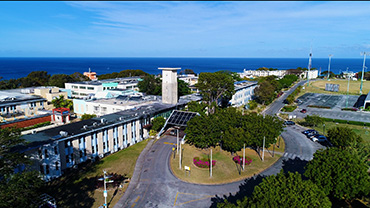 The University of the West Indies
Established in 1948, the UWI is the largest and longest standing higher-education provider in the English-speaking Caribbean. An innovative, internationally competitive, contemporary university deeply rooted in the Caribbean, the UWI has expanded to five campuses: Cave Hill in Barbados, Mona in Jamaica, St. Augustine in Trinidad and Tobago, the Open Campus, and the Five Islands campus in Antigua and Barbuda. As the number one Caribbean university, the UWI is internationally recognized as a centre of excellence in research, knowledge creation and innovation on matters related to the Caribbean and small island states.
 University of Leicester
Established in 1921 and granted its royal charter in 1957, the University of Leicester is ranked among the top 30 universities in the UK by the Complete University Guide and the top 200 in the world by the Times Higher Education newspaper. It gained worldwide recognition for pioneering work in establishing genetic fingerprinting in 1986 and for the recent discovery and identification of the remains of King Richard III. UoL was ranked 26th in the world for research quality in the Times Higher Education World Global Rankings for 2026.
University of Alberta
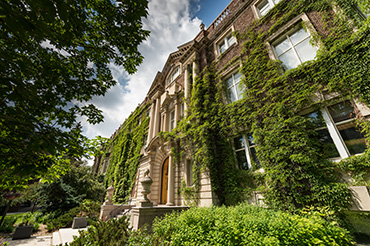 The University of Alberta is located in one of the northernmost major cities in the world, Edmonton, a city with one million residents where people come together to build, create and change things for the better. UofA is a Top 4 Canadian university and one of the Top 100 in the world. Its vision is to inspire the human spirit through outstanding achievements in learning, discovery and citizenship in a creative community, building one of the world's great universities for the public good. Among its world class research UofA has a unique Faculty of Native Studies specializing in issues of languages, cultures, land and resources.
Testimonials
 ‘I found the first UWI/UL summer school last year informative, engaging and exciting. I was introduced to new discussions and current research which inspired my own research. The focus on collaborative projects encouraged me to search for partnerships in research not just in my own field but also across disciplines and borders. I thoroughly enjoyed every minute of it and I am looking forward to attending the next one.’
Denise Springer, PhD Researcher at the University of the West Indies, Cave Hill, Barbados
‘UWI/UL Summer School 2019 was an amazing experience! The meeting of students and academics from a wide cross section of disciplines and perspectives made the presentations and discussions on the theme a truly enriching encounter. Friendships were formed, cultures learned, significant places explored, and there’s a yearning for a repeat of this experience, albeit in the beautiful Caribbean. I eagerly await UWI/UL Summer School 2020...’
Queenela Cameron, Postdoctoral Researcher at the University of Guyana
'I gained invaluable knowledge and professional connections and discovered illuminating interdisciplinary crossovers within Caribbean studies. I found the coming-together of many differing scholars, from both the UK and throughout the Caribbean, an exceptional academic experience. The whole week facilitated a unique opportunity to exchange a wealth of diverse expertise, surrounding Caribbean studies, both within the classroom as well as in the opportunities to socialise with attendees and speakers.'
Thomas Lockwood-Moran, PhD Researcher at Nottingham Trent University, UK
‘The UWI/UL Summer School provided a great opportunity to exchange knowledge with both academics and peers, and to situate myself within a global research culture. Taught sessions were well prepared and informative and fed into my thesis research. I also found it beneficial to collaboratively learn alongside peers from UWI, which facilitated a depth of communication that cannot easily be found in a conference environment. I would recommend the Summer School to any postgraduate student interested in Caribbean Studies, there are few programmes like this offered by UK universities.’
Kelsi Delaney, PhD Researcher at the University of Leicester, UK
'The 2024 Summer School in Trinidad proved to be even more valuable than I could have expected. I learned so much from the various lectures, which were given by both scholars and community workers. The professional development sessions were also very useful, challenging me to think about how I could translate my work beyond the very individual writing we are generally trained to do in the humanities and towards the more collective process of interdisciplinary networks and meaningful community engagement. What has been most important to my academic growth, however, are the connections I made with other graduate students and early career scholars from the Caribbean and elsewhere. These connections – many of which I continue to be in touch with – are amazingly supportive and generative, pushing and fostering my thinking in ways that I believe have demonstrably improved both my dissertation and my other academic projects.
Lizette Gerber, PhD Researcher at the University of Alberta, Canada
'2025 marked the third time I attended the International Summer School. What keeps me coming back is the opportunity to engage with researchers, writers, community activists and educators from around the world in a warm, discursive space that is incredibly enriching, positively challenging and nurturing. It has been invaluable as a source of inspiration, introducing me to brilliant and innovative theories, methodologies and research coming out of the Caribbean and other connected spaces. In itself it is an example of the empowering, fruitful nature of networks, collaborative work and interdisciplinarity, and how inclusive academia can look and feel.'
Carinya Sharples, PhD Researcher at the University of Leicester, UK