About the University of Leicester
Professor Mike King
The University is sorry to announce the passing of a former colleague, Mike King, in February 2026 after a short illness.
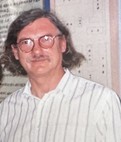 Mike joined the University in 1989 as one of the first members of the academic staff of the nascent Centre for the Study of Public Order, thence the Scarman Centre, a research and postgraduate studies unit that eventually became the Department of Criminology. Mike’s expertise was largely focused on policing and public order and his work within the Centre was vital to the development and expansion of university programmes in those fields. He played a central role in the foundation of a Masters in Public Order, a high-level course that attracted senior police, policy-makers and other experts in a manner that was rather innovative during a time before the development of large-scale education programmes in that field. Bringing together practitioners from various backgrounds and from a range of countries reflected Mike’s long-standing interest and expertise in comparative research work. In this regard, Mike was in the avant garde of research into policing changes in post-communist Eastern Europe, developing some of the first comparative analytical studies in the field. He was an advocate and friend to many of the international postgraduate students, PhD students, and visiting fellows who spent time at the Centre, based on Upper New Walk in Leicester, over the years and contributed significantly to the vibrant and dynamic atmosphere of the place. He edited the Centre’s occasional paper series which particularly helped early career researchers to develop a publishing profile while also establishing the Centre’s name in criminological and policing circles.
Also innovative to the work of the Centre during the 1990s was the development of distance learning programmes, largely targeted at professional audiences and overseas students with a preference for studying in their home countries rather than on campus in the UK. Again, Mike played a central role in the creation of these degrees – commissioning, writing and editing huge volumes of course material to tight deadlines. He was a source of calm wisdom in hectic and challenging times and a great colleague to established and more junior staff. Through its development of distance learning degrees, the Scarman Centre was in the vanguard of universities developing opportunities for overseas students to study for British degrees. A particular focus of opportunities for the study of public order and criminology was the partnership Leicester forged with the British Council in Hong Kong in the early 1990s. Mike visited Hong Kong as part of his broader commitment to the internationalisation of Leicester’s postgraduate courses and undertook further pathbreaking visits to universities in India and the People’s Republic of China in the 1990s, well in advance of the subsequent and substantial admission of students from these countries to British higher education.
Mike’s research and writing explored the social and political context in which public disorder develops. Historically and nationally comparative, in many cases, Mike’s insistence on understanding the breadth and depth of the roots of rioting, protest and collective violence was important in a period where academic analysis of these matters was often marginalised within policy and practice. Through this work he made an important contribution to the development of criminological and sociological research into policing and public disorder and helped to forge links between academia and practice that have become relatively normal in the 21st century but were innovative and bold even in the recent past. A key empirical focus of Mike’s work on the MA in Public Order was the spate of riots in British cities that had occurred in the 1980s along with increasing violence on the picket lines of major industrial disputes such as the Miners' Strike of 1984-85. Influenced by the work of Antonio Gramsci, Jurgen Habermas, Egon Bittner, Tom Bowden and Piotr Sztompka, Mike placed such events in historical and comparative perspective both to counter a populist preoccupation with ahistorical generalities about social disorder (the psychology of the crowd, the mindless criminality of the mob etc.) and to argue that major incidents of urban and industrial unrest are moments of crisis, the policing of which makes the real distribution of power in society abundantly clear. This perspective brought Mike into contact with another long-standing friend and collaborator, David P Waddington, whose work on the role of public order policing in either escalating or defusing riots, the ‘flashpoints’ model, is a central reference in this research field. Mike and David subsequently collaborated on research, applying this model to an understanding of riots in the UK and in France in the early twenty-first century, co-editing a volume of studies on this topic published in 2009. Earlier Mike had co-authored a book on public order policing with a colleague from Leicester, Nigel Brearley. This was the first to study the hitherto secretive and controversial approach of the police to developing ‘tension indicators’ as a means of trying to anticipate riots. Through this work, Mike made a lasting contribution to the study of policing and public disorder such that it is now widely accepted the police are not impartial responders to civil unrest but can be active ingredients in its causes.
Mike left the University in 2004 and took up a post at Birmingham City University where he remained until his retirement in 2009. After that Mike focused his attention on his allotment and enjoying walks in Pembrokeshire, to where he relocated with his partner Wibke.
Mike will be fondly remembered. We are sorry to hear of his passing, and our thoughts are with his close family and friends.
Obituary written by Mike Rowe, Adrian Beck, Adam Edwards and Jon Garland.