People
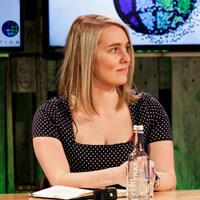
Dr Tess Osborne
Lecturer in Human Geography
School/Department: Geography, Geology and the Environment, School of
Telephone: +44 (0)116 252 3858
Email: [email protected]
Profile
I am a Lecturer in Human Geography and joined the School of Geography, Geology and the Environment at the University of Leicester in 2022. I am a health geographer, and I explore the link between the application of digital technology (as a method and in everyday life), the environment, and questions of health and wellbeing in urban settings. Both areas have become increasingly important in recent years and stresses the importance of the digital world and our physical environment influences our health and wellbeing.
Research
Dr. Tess Osborne’s research explores the health and well-being, investigating how emerging digital tools reshape social experiences, emotions, and mobility. Her work is deeply interdisciplinary, integrating qualitative and quantitative methodologies to address complex societal challenges related to digital, the environment and health geographies. A key focus of her research is biosocial methodologies, including the use of wearable biosensing technologies to examine physiological responses to urban environments.
Publications
I have published three books with another under contract, twenty-seven peer-reviewed papers (nine as first author) with a further five under review, plus nine chapters in edited collections. As of August 2025, I had 900 citations and a H-index of 13. Some of my recent selected publications include:
-
Osborne, T. & Kinsley. S. (under contract) Digital Geography: The Basics, Routledge.
-
Drozdzewski, D., Webster, N., Osborne, T. & Conradson, D. (2026) A Research Agenda for Emotional Geographies, Edward Elgar.
-
Paiva, D., da Silva, M., Ferreira, D. & Osborne, T. (2026) The thermalscapes of urban consumption: informal shading practices in a hot Brazilian city centre, Cities, 169, 106590
-
Osborne, T., Drozdzewski, D. & Qu, T. (2025) BioSocial Walking: Exploring migrant mobility and belonging, GeoForum, 167, 104441
-
Adams, K., Jephcote, C., Fenech, B., Hansell, A. Osborne, T. & Gulliver, J. (2025) Inequalities in road traffic noise exposure levels in greenspaces in Greater London, Health and Place, 96, 103536.
-
Osborne, T., Lowe T.A. & Meijering, L. (2025) Caring with: positioning social support in landscapes of care, Wellbeing, Space and Society, 9, 100295.
-
Osborne, T. & Jones, P. (Eds.) (2023) A Research Agenda for Digital Geographies, Edward Elgar
-
Osborne, T., Lowe, T. & Meijering, L. (2023) Care and rhythmanalysis: Using metastability to understand the routines of dementia care, Social Science and Medicine, 331, e116099.
-
Osborne, T. & Meijering, L. (2023) ‘We may be long in the tooth, but it makes us tough’: Exploring stillness for older adults during the COVID-19 lockdowns, Social & Cultural Geography, 24(3-4), 447-466.
-
Jones, P. & Osborne, T. (2022) Virtual Reality Methods: a guide for researchers in the social sciences and humanities, Policy Press.
-
Osborne, T. (2022) Restorative and afflicting qualities of the micro-space encounter: psychophysiological reactions to the spaces of the city, Annals of the American Association of Geographers, 112(5), 1461-1483.
-
Osborne, T. & Jones, P. (2022) Embodied virtual geographies: linkages between bodies and digital environments, Geography Compass, 16, e12648
Publications
Books/Manuscripts:
Osborne, T. & Jones, P. (2023) The Research Agenda for Digital Geographies, Edward Elgar.
Jones, P. & Osborne, T. (2022) Virtual Reality methods: a guide for researchers in the social sciences and humanities, Policy Press.
Peer-reviewed journal articles:
Osborne, T. & Meijering, L. (In Press) ‘We may be long in the tooth, but it makes us tough’: Exploring stillness for older adults during the COVID-19 lockdowns, Social & Cultural Geography.
Lowe, T., Osborne, T. & Bell, S. (In Press) Remote Graphic elicitation: A critical reflection on the emotional affordance and disruption management in caregiver research, Area.
Lowe, T., de Haas, B., Osborne, T. & Meijering, L. (In Press) Older adults’ adaptations to life events: A mobility perspective, Ageing & Society.
Osborne, T. (2022) Restorative and afflicting qualities of the micro-space encounter: psychophysiological reactions to the spaces of the city, Annals of the American Association of Geographers, 112(5), 1461-1483.
Osborne, T. & Jones, P. (2022) Embodied virtual geographies: linkages between bodies and digital environments, Geography Compass, 16, e12648
Pykett, J., Chrisinger, B., Kyriakou, K., Osborne, T., Resch, B., Strathi, A., & Whittaker, A., (2020) Urban emotion sensing beyond affective capture: advancing critical interdisciplinary methods, International Journal of Environmental Health Research, 17(23), 9003.
Meijering, L., Osborne, T., Montagner, C. & Hoorn, E. (2020) How the GDPR can contribute to improving geographical research. Geoforum, 117, 291-295.
Pykett, J., Chrisinger, B., Kyriakou, K., Osborne, T., Resch, B., Strathi, A., Tóth, E., Whittaker, A. (2020) Understanding the embodied and social determinants of urban stress through citizen social science, Palgrave Communications, 6(85), 1-11.
Pykett, J., Osborne, T., & Resch, B. (2020) From Urban Stress to Neurourbanism: How Should We Research City Wellbeing?, Annals of the American Association of Geographers, 110(6), 1936-1951.
Foley, R., Bell, S., Gittens, H., Grove, H., Kaley, A., Osborne, T., Power, A., Roberts, E. & Thomas, M. (2020) ‘Disciplined research in undisciplined settings’: Critical Explorations of In-Situ and Mobile Methodologies in Geographies of Health and Wellbeing, Area, 52, 514-522.
Jones, P. & Osborne, T. (2020) Analysing virtual landscapes using postmemory, Social & Cultural Geography, 21(1), 186-206.
Kyriakou, K., Resch, B., Sagl, G., Petutschnig, A., Werner, C., Niederseer, D., Liedlgruber, M., Wilhelm, F., Osborne, T., & Pykett, J. (2019) Detecting moments of stress from measurements of wearable physiological sensors, Sensors, 19(17), 3805.
Osborne, T., Warner, E., Jones, P. & Resch, B. (2019) Performing social media: artistic approaches to analysing big data, GeoHumanities, 5(1), 282-294.
Disney, T., Warwick, L., Ferguson, H., Leigh, J. T., Cooner, T., Beddoe, L., Jones, P. & Osborne, T. (2019) “Isn’t it funny the children that are further away we don’t think about as much?”: Using GPS to explore the Mobilities and Geographies of Social Work and Child Protection Practice, Children & Youth Services Review, 100, 39-49.
Osborne, T. & Jones, P. (2017) Biosensing and geography: a mixed methods approach, Applied Geography, 87, 160-169.
Book chapters:
Osborne, T. & Jones, P. (2023) Introduction: Setting a digital research agenda, in Osborne, T. & Jones, P. (Eds.) The Research Agenda for Digital Geographies, Edward Elgar.
Osborne, T., Morgado, P., Paiva, D. & Versey, S. (2023) Digital Embodied Methods, in Osborne, T. & Jones, P. (Eds.) The Research Agenda for Digital Geographies, Edward Elgar.
Jones, P. & Osborne, T. (2023) Conclusion, in Osborne, T. & Jones, P. (Eds.) The Research Agenda for Digital Geographies, Edward Elgar.
Osborne, T. Dul, A. & Meijering, L. (2021) Exploring older adult’s experiences of urban space in the COVID-19 lockdown(s): Dutch and British perspectives, in van Melik, R., Filion, P. & Doucet, B. (Eds.) Global Reflections on COVID-19 and Urban Inequalities Volume III: Public Space and Mobility, Policy Press. p. 109-118.
Jones, P. & Osborne, T. (2021) Games in research, games as research, in: von Benzon, N., Holton, M., Wilkinson, C. & Wilkinson, S. (Eds) Creative Methods for Human Geographers, SAGE. p. 285-295.
Osborne, T. & Jones, P. (2021) Virtual reality and memorials: (re)building and experiencing the past, in: Micieli-Voutsinas, J. & Person, A. (Eds.) Affective Architectures: More-than-representational approaches to Geographies of Heritage, Routledge. p. 252-266.
Jones, P. & Osborne, T. (2020) Measuring the body, in: Jones, P. Bodies, Technologies and Methods, Routledge. p. 31-58.
Osborne, T. (2019) Biosensing: a critical reflection on doing memory research through the body in: Drozdzewski, D & Birdsall, C (Eds.) Doing Memory Research: New Methods and Approaches, Palgrave Macmillan. p. 63-85.
Supervision
I am interested in supervising postgraduate researchers in the following research areas:
- Geographies of health and wellbeing
- Digital geographies
- Environmental health
- Digital technologies and ethics
Current PGRs
- Kathryn Adams - Modelling the Environmental (in)justices associated with Road Traffic Noise: A spatiotemporal analysis.
- Ikal Angelei - Dilemma in Ng'irerea: The Evolving Landscape of Turkana's Pastoralists.
- John Pateman - Articulating the impact of cultural programming in UK public libraries.
- Tianchen Qu - The impact of real-time green exposure on human emotions
- Danielle Sheppard - Rural Super-Gentrification: An Investigation of Social Change within Three English Villages.
Completed PGRs
- Thomas Lowe (2024) - The Golden Years? Older adult mobility experiences and perceptions across the later life course in England.
- Charlie Hewitt (2023) - Discovering the way: Automated Machine Learning improvement of path network data.
Teaching
- GY1424 The Digital World [module lead]
- GY1422 Skills for Professional Geographies
- GY2414 Research Methods and Design (with Dissertation)
- GY3425 Critical Digital Geographies
- GY3419 Geographies of Health & Wellbeing [module lead]
- GY3418 Berlin Fieldcourse
- GY3420/GY3540 Dissertation
- GY7715/GY7411 Contemporary Critical Geographies
Press and media
Digital Technologies; Virtual Reality and Health and Wellbeing.
Activities
Committees
- Chair of the Digital Geographies Research Group of the Royal Geographical Society
- Committee Member for the Geographies of Health and Well-being Research Group
Memberships
- Fellow of the Royal Geographical Society with Institute of British Geographers (RGS-IBG).
- Member of the Koninklijk Nederlandsch Aardrijkskundig Genootschap [Royal Dutch Geographical Society] (KNAG).
- Member of the American Association of Geographers (AAG).
- Member of the International Ambiances Network.
- Member of the Memory Studies Association (MSA).